TL;DR
Electrical control panel design covers how you plan, build, and wire the enclosures that control industrial machines. A good design uses the right components, follows safety standards, and keeps wiring clean and organized. This blog walks you through key components, layout rules, wiring tips, top software tools, and industry standards. EngiDes leads the field with expert panel design services that cover everything from schematics to final testing.
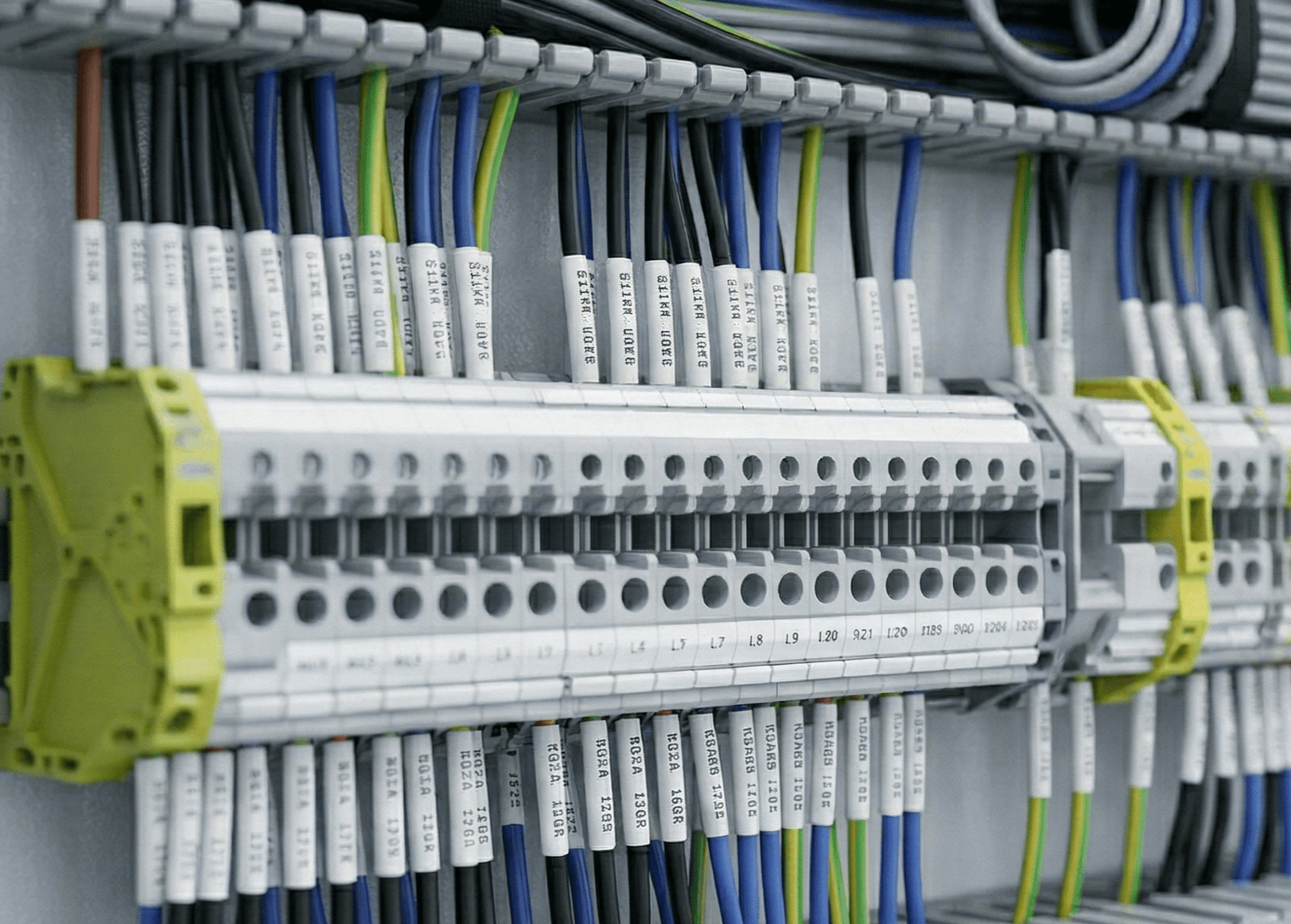
Electrical control panel design is at the heart of every industrial system. Whether you manage a factory floor, a utility network, or a commercial building, your control panel keeps everything running. A well-designed panel protects your equipment, keeps your workers safe, and makes maintenance fast and easy. In this guide, we cover the core components, layout best practices, wiring tips, software tools, and the standards that every engineer must follow. We also show you why EngiDes is the firm that businesses across North America trust for this work.
Electrical control panel design is the process of planning and building an enclosure that houses electrical components. These components monitor, protect, and control machines or systems in a facility. The panel takes input signals from sensors or operators, processes them, and sends commands to motors, valves, or other equipment.
Think of the control panel as the brain of your machine. It makes decisions, routes power, and protects the system from faults. Without a good design, the panel can overheat, trigger false trips, or become a safety hazard for your team. Therefore, every design decision from wire sizing to component placement matters.
Almost every industry that uses machinery needs it. Here are the sectors that rely on it most:
Industry | Typical Use Case |
Manufacturing | Automated production lines, robotic cells |
Oil and Gas | Monitoring, flow control, safety shutdowns |
Water Treatment | Pump control, valve automation, SCADA integration |
Commercial Buildings | HVAC, lighting, and access control systems |
Renewable Energy | Solar inverter control, wind turbine management |
Table 1: Industries that rely on electrical control panel design and their most common use cases.
A poorly designed panel costs you more than you think. It leads to unplanned downtime, expensive rewiring, and failed safety audits. Moreover, it puts your workers at risk. Getting the design right from the start is always the smarter investment.
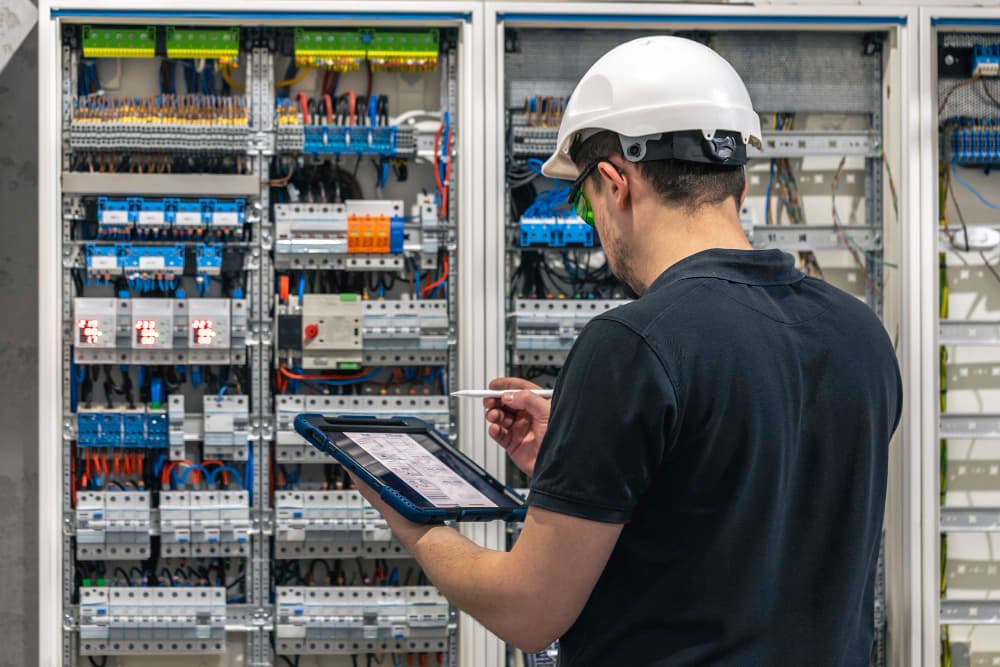
Every panel contains a set of standard components. Knowing what each one does helps you plan a better layout and avoid costly errors during installation.
Circuit breakers and fuses protect your system from overcurrent conditions. Always size them correctly for the load they protect. Oversizing a breaker is one of the most common mistakes in panel design. It creates a false sense of protection and can lead to serious equipment damage.
Programmable Logic Controllers (PLCs) are the decision-makers inside an industrial control panel design. They read inputs from sensors and trigger outputs based on your program logic. Relays act as isolation switches and help separate high-power circuits from low-power control circuits. Together, PLCs and relays give your panel flexibility and safety.
Terminal blocks give every wire a fixed landing point. They make your panel neat and easy to trace. Bus bars distribute power across the panel without messy wire bundles. Use DIN-rail-mounted terminal blocks wherever possible they make upgrades and replacements much faster.
Control circuits often need a different voltage than the power supply provides. Transformers step down the voltage, and dedicated DC power supplies feed PLCs and communication devices. Always size your power supply with a 20–30% safety margin above your calculated load.
A Human-Machine Interface (HMI) lets operators interact with the system directly. It shows real-time data, active alarms, and system status. Operators can also change setpoints or run commands without touching internal wiring. HMIs are now standard in modern industrial control panel design because they reduce operator error and speed up diagnostics.
A good layout speeds up installation and makes long-term maintenance much easier. Furthermore, it ensures that every component works within its rated temperature range.
Always choose a panel enclosure with at least 20% extra space. This gives you room for future upgrades without ordering a new enclosure. Consider the ingress protection (IP) rating based on your environment. An IP65 enclosure works well in dusty or wet areas, while an IP54 works for dry indoor locations.
Place high-power components like the main breaker and bus bar at the top of the panel. Locate PLCs and communication devices in the middle. Put terminal blocks and lower-voltage devices at the bottom. This layout keeps high voltage away from operators during routine terminal work.
Component | Minimum Clearance Recommended |
Circuit Breakers | 25 mm between adjacent units |
PLCs | 50 mm on all sides |
Power Supplies | 75 mm above and below |
Terminal Blocks | 50 mm from panel side walls |
Transformers | 100 mm on all sides |
Table 2: Recommended component clearances for standard industrial control panels. Source: based on IEC 61439 and UL 508A guidelines.
Heat is the biggest enemy of electrical components. Therefore, you must calculate the total heat load (in watts) before selecting your enclosure size. For panels above 500W of internal heat, use forced ventilation or an air conditioner. You can also run a thermal simulation before building to find hot spots early. Never stack high-heat devices like power supplies directly above PLCs the heat rises and shortens PLC life.
Good cable management starts during the design phase, not during installation. Use cable ducts and wire trays to route cables cleanly. Separate power cables from signal and communication cables to prevent electromagnetic interference (EMI). Additionally, leave enough slack at every connection point so that a repair does not require pulling and rewiring an entire duct.
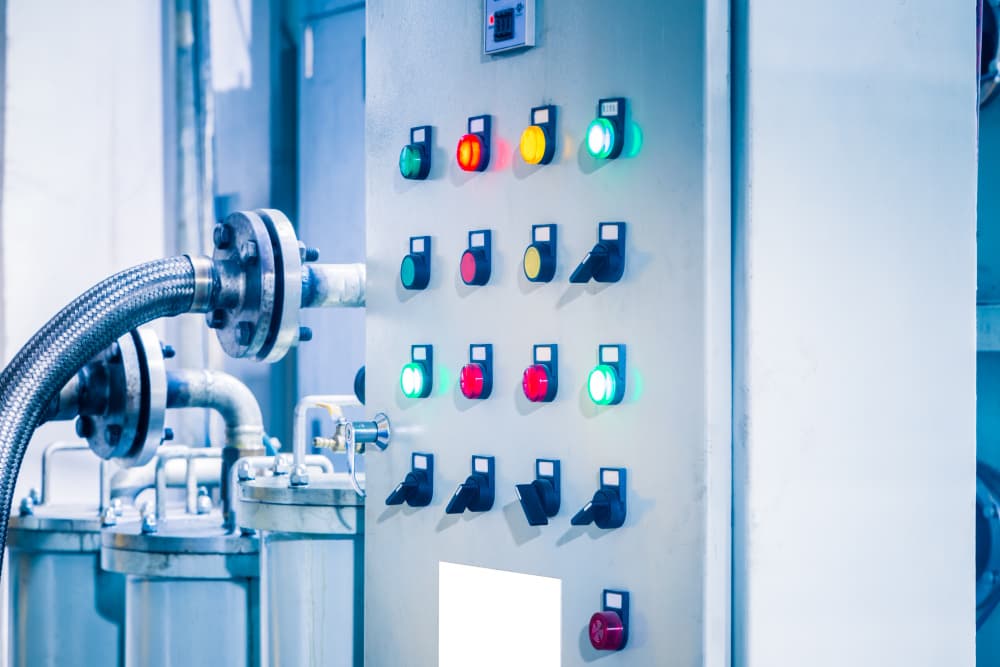
Following standards is not optional it is a legal and safety requirement. Standards protect your workers, your equipment, and your company from liability. Here are the three standards you must know.
UL 508A is the leading standard for industrial control panel design in North America. It defines rules for wire sizing, component ratings, short-circuit protection, and enclosure markings. Most US-based end users and insurance companies require UL 508A listing before they accept a panel on-site. If you sell panels in the US, this standard is non-negotiable.
NFPA 79 focuses on electrical safety for industrial machinery. It covers topics like wire color codes, control circuit protection, and emergency stop requirements. If you design panels for machine tools, robots, or automated systems, you must comply with NFPA 79 alongside UL 508A.
The International Electrotechnical Commission (IEC) publishes global standards for electrical panels. IEC 61439 applies to low-voltage switchgear and control gear assemblies. Teams that work on international projects often need to meet both IEC and UL requirements simultaneously. Moreover, IEC standards are common in Europe, Asia, and the Middle East, so knowing both systems makes your team more competitive globally.
Control panel wiring design is where most errors happen. However, a clear wiring plan removes confusion and keeps your build on schedule.
Use a consistent color code on every project and document it clearly. In North America (per NFPA 79), use black for AC line voltage, white for neutral, and green or bare for ground. In IEC-based systems, use brown for live, blue for neutral, and green/yellow for ground. Mixing color codes on a project creates dangerous confusion for maintenance technicians.
Every wire must carry a label at both ends. Use heat-shrink labels or clip-on markers with machine-printed text. Good wire labeling cuts troubleshooting time by more than 50%. Furthermore, it helps a new technician understand the panel without ever calling the original designer. Never rely on handwritten labels they fade and become unreadable within months.
Route high-voltage power wires in separate ducts from low-voltage signal wires. Bundle wires of the same type and tie them at 150–200mm intervals with cable ties. Additionally, leave 100–150mm of service loop at every termination point. This slack allows you to re-terminate a wire without replacing it entirely, which saves time and money during field repairs.

Modern electrical control panel design software makes the design process faster, more accurate, and easier to document. These tools let you build schematics, generate bills of materials, and check for wiring errors before a single wire gets cut.
EPLAN Electric P8 is one of the most powerful tools in the industry. It automates report generation, connects to live parts databases, and supports collaborative multi-user design. Large engineering firms use it for complex projects where accuracy and traceability are critical. Moreover, EPLAN integrates with ERP and PLM systems, making it a strong choice for enterprise-level industrial control panel design.
AutoCAD Electrical is a popular choice for teams already working within the AutoCAD ecosystem. It adds electrical-specific tools like wire numbering, cross-referencing, and panel layout views on top of the standard CAD platform. Teams that already know AutoCAD can move to AutoCAD Electrical with minimal retraining.
SEE Electrical by IGE+XAO suits mid-size engineering firms that want a clean, fast interface. It supports multi-language projects, integrates with PDM systems, and generates IEC-compliant schematics automatically. Additionally, its bill-of-materials engine links directly to supplier catalogs, so your parts list stays accurate from the first revision.
A solid electrical control panel design guide removes guesswork and keeps your team on the same page from start to finish. Here is the process that top firms follow.
Start with a clear functional specification document. This document defines what the panel must do, what inputs it receives, what outputs it controls, and what safety functions it must perform. Get sign-off from your client or end user before moving forward. Changes after the build phase are expensive.
Build your schematics first, then generate the bill of materials (BOM) from them. This sequence keeps your parts list accurate and avoids the common mistake of selecting components before the design is final. Working with a qualified MEP engineering team at this stage helps you catch design conflicts early and align the panel design with the broader electrical system.
Next, place all components in your panel layout and run a heat load calculation. Confirm that your chosen enclosure handles the thermal load. Adjust component placement if you find hot spots. This step saves you from costly rework after the build.
Get a peer review of the schematics and layout before releasing the design for build. After the build, perform a Factory Acceptance Test (FAT). Document every test result and keep a copy with the panel for the lifetime of the equipment. Moreover, a well-documented FAT report makes site commissioning much faster.
EngiDes is a leading engineering firm with deep expertise in electrical control panel design. Their team follows all major standards, including UL 508A, NFPA 79, and IEC 61439. They use advanced software tools to identify and fix errors during the design phase long before a panel ever gets built.
What sets EngiDes apart is their integrated approach. They combine electrical, mechanical, and structural engineering in every project. This means the panel design works seamlessly with the building systems around it. Many businesses across North America choose EngiDes for critical panel projects because of this end-to-end capability.
Their process mirrors the same rigorous methodology that top structural engineers use before finalizing a building design. You can see this kind of thorough engineering thinking in action in this expert structural engineering guide. The same discipline applies to every panel design that the EngiDes team delivers.
Electrical control panel design is a detailed and technical process. However, when you follow the right steps from clear specifications to proper component selection, smart layout, clean wiring, and thorough testing you get a panel that performs reliably for years. Start with a solid plan, follow the applicable standards, and never skip the testing phase. Whether you handle design in-house or partner with a firm like EngiDes, always put safety and compliance first.
If you want to explore more AI-powered engineering tools and resources to support your next project, visit Engides for a curated list of solutions built for engineering teams.
Electrical control panel design will keep evolving with smarter software, tighter standards, and more connected industrial systems. However, the core principles thoughtful layout, proper wiring, and strict compliance will always stay the same. Apply these principles today, and build panels that your team, your clients, and your auditors can trust.
Electrical control panel design is the full process of planning, laying out, wiring, and testing an industrial control enclosure.
Core components include circuit breakers, PLCs, relays, terminal blocks, bus bars, power supplies, and HMIs.
Always leave at least 20% extra space in your enclosure for future upgrades and additions.
Manage heat carefully calculate the thermal load before selecting an enclosure and use forced ventilation when needed.
Follow the right standards: UL 508A for North America, NFPA 79 for industrial machinery, and IEC 61439 for international projects.
Use consistent wire color codes on every project and label every wire at both ends.
Top software tools include EPLAN Electric P8, AutoCAD Electrical, and SEE Electrical choose based on your team size and project complexity.
Follow a structured design guide: spec first, then schematics, then layout, then review, then build and test.
EngiDes
offers full-service electrical control panel design with integrated MEP capabilities and strict standards compliance.
Good design reduces downtime, lowers maintenance costs, and keeps your workforce safe making it one of the best investments in any industrial project.
 Engides