A soft story building has a weak or open ground floor, making it especially vulnerable to collapse during an earthquake. A soft story retrofit fortifies this level with engineered steel frames or shear walls, significantly lowering the risk of catastrophic failure. Expert structural retrofitting is essential and often mandated by local ordinances in earthquake-prone regions. While soft story retrofit cost varies, investing in a retrofit protects both life and property at a fraction of replacement or liability costs.
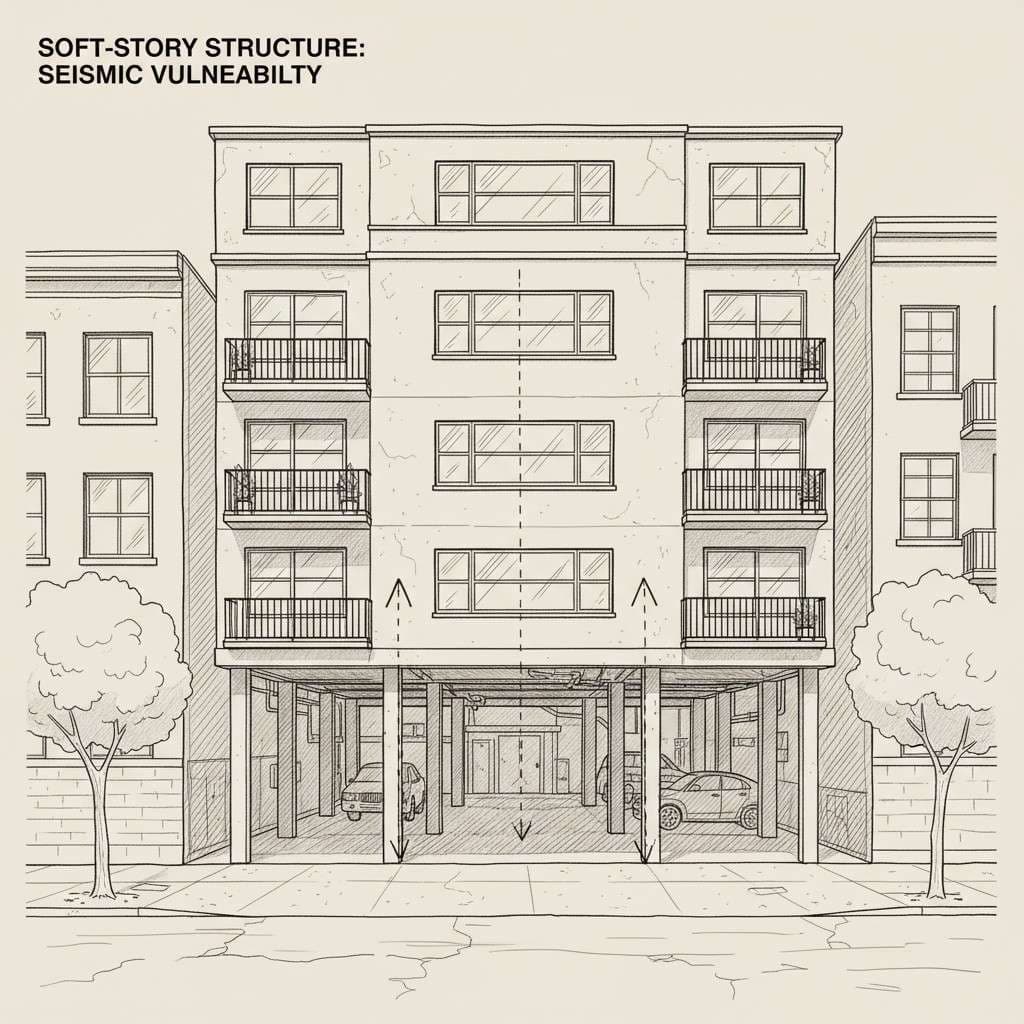
Earthquakes pose significant risks for dense urban environments where the aging building stock often includes soft story structures. This comprehensive guide delivers in-depth insight for engineers, building owners, and real estate professionals, detailing soft story retrofit methodology, costs, and legal implications. We analyze engineering solutions and compliance requirements, and reference emerging best practices for seismic safety, with examples from San Francisco, Los Angeles, and global case studies. This guide also highlights where structural retrofitting overlaps with broader urban resilience efforts and what design professionals need to know.
For further background and application of seismic retrofitting to a wider array of building types, see our detailed article on Seismic Retrofitting Services at EngiDes.com.
A soft story building, archetypal in mid-century urban construction, is defined by a ground floor with less shear strength than upper floors due to open parking garages, retail glass fronts, or minimal bracing. Lateral loads induced by seismic activity concentrate on the least rigid story, typically the ground floor, where inadequate supports and flexible frames multiply structural vulnerability. The 1994 Northridge earthquake highlighted the catastrophic failure potential of these configurations, as extensively analyzed in USGS post-disaster reports.
Professionals should recognize soft story risks not only in residential multi-family housing but also in commercial mixed-use assets. Structural evaluations must consider geometry, existing load paths, and prior renovations affecting stiffness or ductility. For applied technical methods in detection and survey, refer to the Pacific Earthquake Engineering Research Center guidelines.
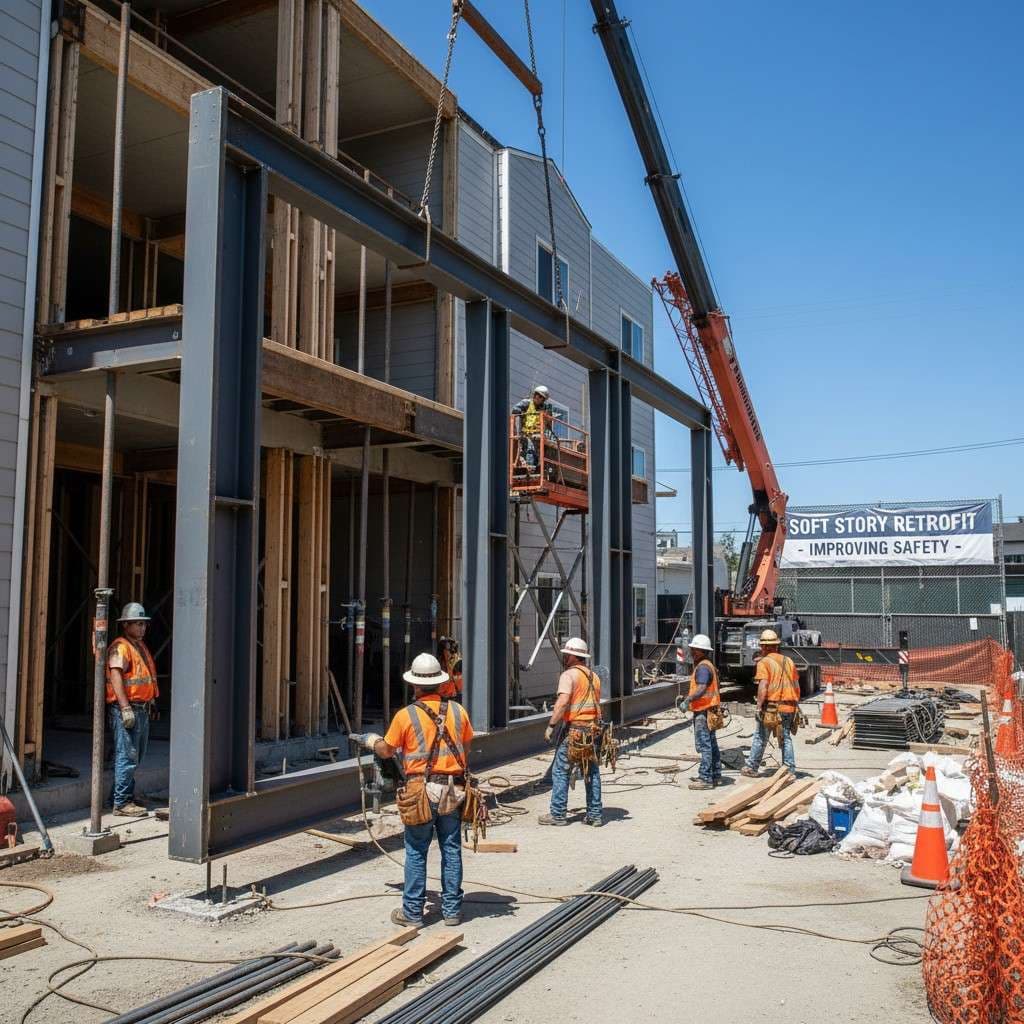
A soft story retrofit thoroughly addresses ground-level weaknesses with engineered interventions targeting lateral-load resistance. The essential steps are as follows:
Structural Evaluation: Experienced structural engineers conduct detailed as-built analysis, employing both finite element modeling and physical inspection to spot vulnerabilities, assess load paths, and map required retrofitting. Checklists follow ASCE 41-23 protocols.
Engineering and Design: Designers specify reinforcement strategies fitting building usage, ground conditions, and architectural constraints. Nonlinear modeling aids in optimizing the placement and dimensioning of retrofits, with a preference for minimally invasive but robust solutions.
Permitting: Submission to municipal authorities must reflect compliance with local amendments to international building code, such as California’s amendments in CBC 2019 and local seismic ordinances. Clear, engineer-stamped documentation streamlines approval.
Construction: Only licensed seismic retrofit specialists should undertake retrofit installations. Techniques are site-specific but may involve staged demolition, moment frame erection, and upgrades to connections and anchorage. For project management methodology in retrofit construction, reference the project case studies at engides.com/blog/soft-story-case-studies.
Inspection and Completion: Frequent, phased inspection by authority-having-jurisdiction (AHJ) ensures conformity with drawings. Non-conformance reports (NCRs) are addressed as-needed. A final city sign-off and engineer-of-record compliance letter finish the project.
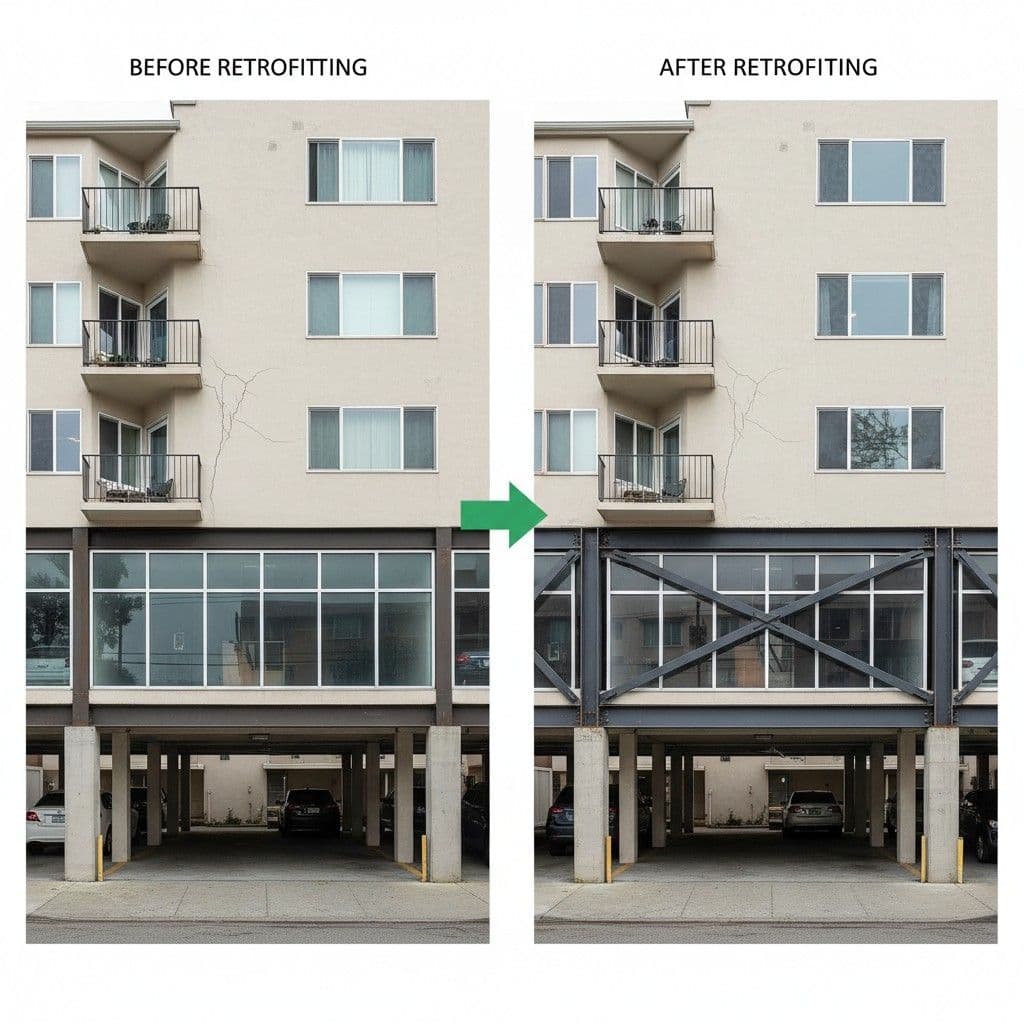
Soft story building retrofitting draws upon several advanced engineering solutions, each with a distinct performance profile:
Retrofit Method | Description | Best For |
Steel Moment Frames | Designed to resist high lateral loads, frames are installed at critical load paths without impeding parking layouts. | Structures requiring preservation of open ground-level spaces. |
Plywood Shear Walls | Shear panels are inserted to supplement lateral resistance, using high-strength fasteners and engineered connectors. | Buildings with non-essential open areas that can be enclosed. |
Cantilevered Steel Columns | Proprietary columns discretely fit into constrained layouts, with base connections engineered for ductility. | Sites with space limitations or logistics constraints. |
Foundation Strengthening | Foundation elements are thickened, underpinned, or retrofitted for new load patterns per geotechnical analysis. | All retrofit projects where new lateral forces must be distributed safely. |
For a more advanced look at retrofit selection and the decision matrix for structural interventions, consult EngiDes Engineering.
Soft story seismic retrofit projects are subject to ongoing innovation. Hybrid solutions such as energy-dissipating dampers and fiber-reinforced polymers (FRP) are under study and deployment in highly demanding seismic zones, as noted by the Earthquake Engineering Research Institute.
Cost planning for a soft story retrofit requires expert estimation. Variables include the number of units, engineering complexity, construction access, and city-specific regulatory environments. High-end, engineered steel solutions cost more but bring lower life cycle costs and maintenance.
Key factors shaping retrofit cost:
Building Size and Complexity: Larger, more complex footprints demand extensive materials and detailing.
Design Complexity: Advanced moment frames or hybrid systems increase design time and installation labor.
Structural Condition: Addressing unforeseen conditions, like spalling or prior code deficiencies, adds to duration and expense.
Jurisdictional Requirements: Cities such as San Jose and Los Angeles have unique standards.
Permitting, Site Preparation, Living Accommodations: Some cities require tenant displacement plans; others encourage phased construction to maintain occupancy.
Typically, the soft story retrofit cost falls between $80,000 and $350,000 per building, or $5,000 to $18,000 per unit, but expert budgeting requires contingency for upgrades to utilities, fire prevention systems, and ADA compliance.
Consider referencing FEMA’s P-807 report for published guidelines and modeling data on soft story seismic retrofit costs and performance.
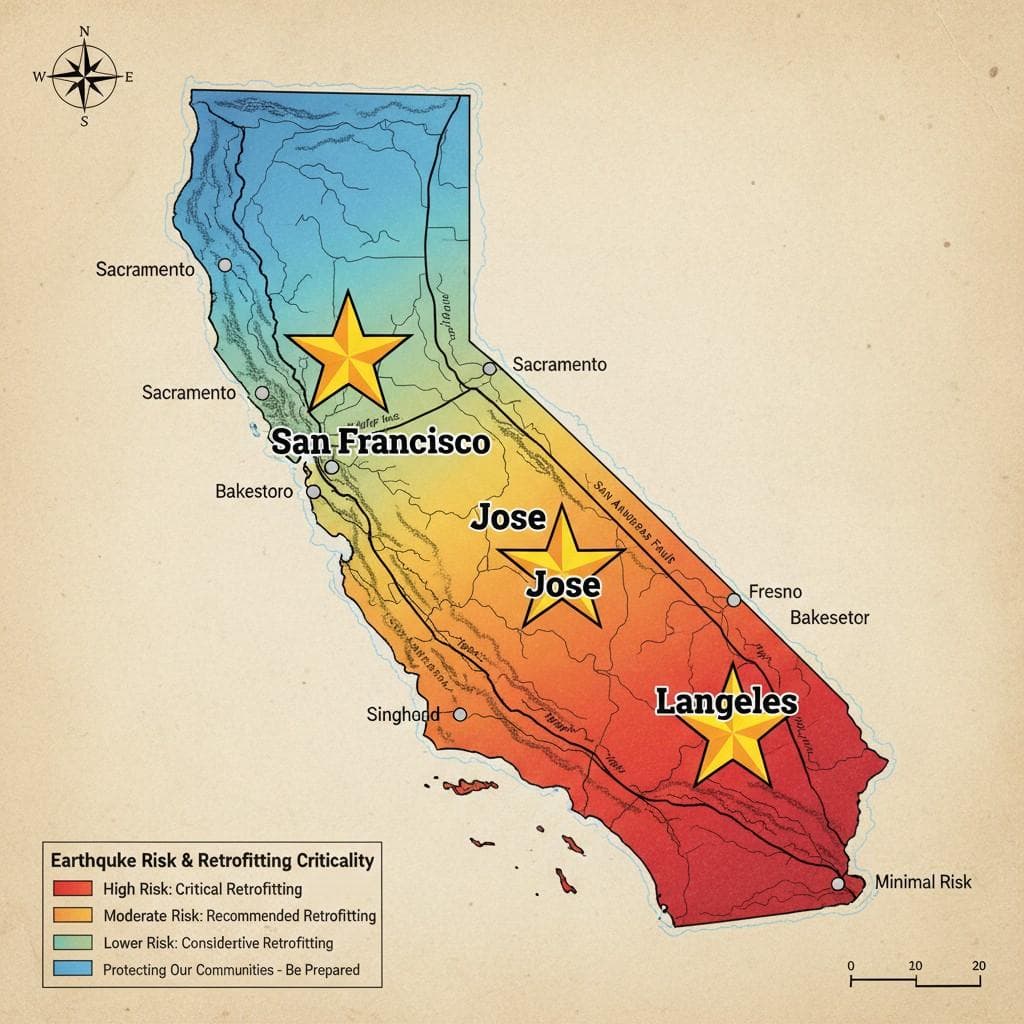
The driving rationale for soft story retrofit is risk reduction. Catastrophic losses in past earthquakes have illustrated the outsized risk soft story collapse poses to high-density residential and commercial zones. Countries with robust seismic policies have drastically reduced casualties and insured losses through systematic retrofitting, as evidenced by research from the Global Earthquake Model Foundation.
For asset managers and property owners, retrofitting ensures not only life safety but minimizes business interruption, liability, and post-event repair costs. Furthermore, compliance with seismic ordinances preserves property value by eliminating red-tag risk and ensuring faster post-disaster recovery.
A soft story retrofit actively positions your building as part of a resilient built environment. Beyond code compliance, retrofitting brings buildings in line with best practices in urban risk management and asset protection two pillars of responsible real estate stewardship.
When you retrofit, you also qualify your portfolio for resilience-based certifications, lower insurance premiums, and access to public financing. The engineering rigor invested in retrofitting translates to safer, higher-quality housing and workspaces. To explore more specialized services on resilience, seismic upgrades, and retrofitting strategies, visit Engides Engineering.
Soft story buildings are defined by under-reinforced ground floors, exposing them to acute seismic risk.
Soft story retrofitting uses advanced engineering and construction methods such as steel moment frames and plywood shear walls to improve seismic performance.
The process involves in-depth engineering analysis, robust design, regulatory compliance, and professional construction management.
Soft story retrofit cost is a multifactorial calculation, but the investment is minimal compared to the risk of catastrophic loss.
Retrofitting is a key lever for resilience in high-density built environments and aligns with best practices in risk mitigation.
 Engides