A seismic retrofit involves strengthening your home to better withstand earthquakes, protecting both your family and your investment. This expert guide explains the process of securing the building’s foundation and reinforcing weak points to prevent potentially catastrophic earthquake damage. While costs can vary, retrofitting is crucial for anyone living in an earthquake-prone zone it significantly improves your building’s structural safety and resilience, often saving lives and investment in the long run. For additional expert advice and tailored engineering solutions, check resources at Engides Engineering.
If you live in an area prone to earthquakes, you know that having an emergency kit is just a start. The strongest protection comes from making sure your house itself won’t crumble or shift during a big quake. That’s where a seismic retrofit comes in a process that upgrades your home’s structural system so it can resist powerful shaking. This article will give you a detailed walkthrough of what seismic retrofit really means, why it’s critical, the different retrofitting techniques, and how to choose the best experts for the job. Whether your home is old or new, large or small, or you simply want to understand what makes homes safer, you’ll find everything you need here. By the end, you’ll know how to keep your family’s safety and your property’s value intact if disaster ever hits. Need help securing a permit or want a professional review? Check how full-service structural engineering can de-risk your retrofit at Engides Engineering's Permit-Ready Construction Drawings.
A seismic retrofit is an upgrade for buildings like giving your home a “safety shield” designed to keep it standing when the ground moves. The main goal? Prevent your home from sliding off its foundation or collapsing during an earthquake. Wikipedia: Seismic Retrofit defines it as making existing structures stronger so they are more resistant to seismic activity, ground motion, and soil failure. This often includes strengthening the foundation and reinforcing weak points.
Many older homes, especially those built before the 1970s when earthquake standards were weaker, have major structural vulnerabilities. Without retrofitting, even moderate tremors can cause big cracks, wall collapses, or total failure.
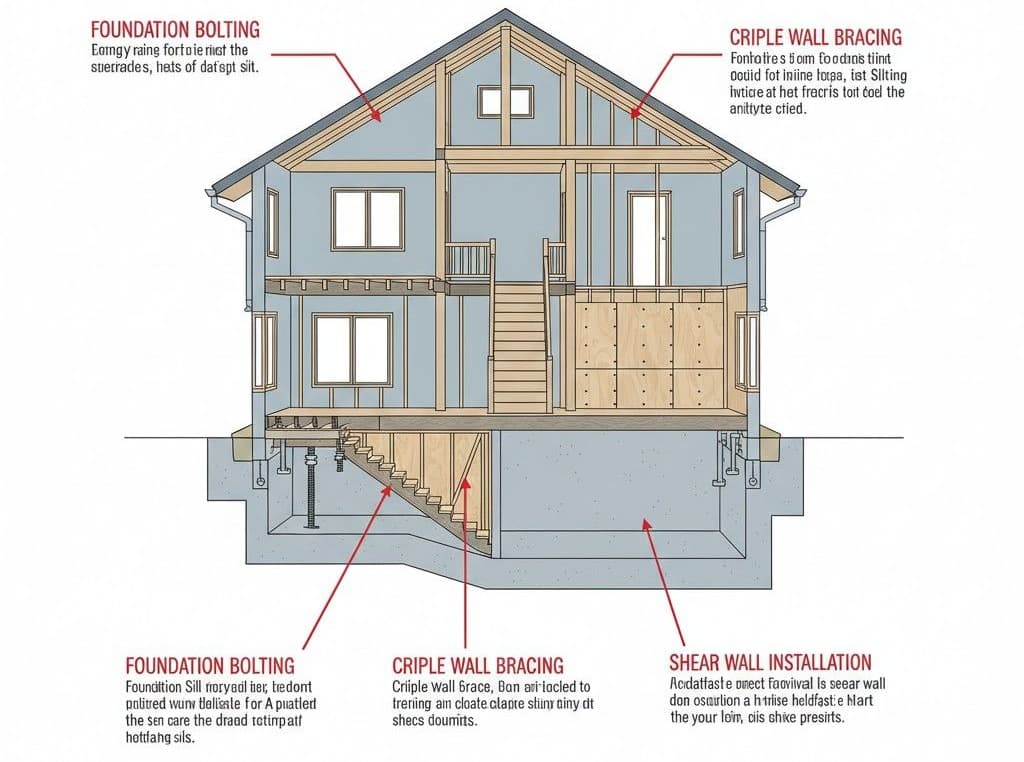
Bolting house to foundation: Special anchor bolts or metal plates tie the wooden frame (mudsill) firmly to the concrete slab. This keeps your home “locked” to its base.
Bracing cripple walls: These short stud walls between the foundation and the first floor (often found in crawl spaces) get stiffened with plywood sheathing, so they don't simply fold or snap.
Reinforcing floors and walls: Structural panels like plywood or oriented strand board are added to walls or floors to spread shaking forces and prevent collapse.
Securing heavy fixtures: Water heaters, utility equipment, and even chimneys must be anchored, so they don’t tip and cause gas leaks or fires.
When a retrofit is done, all the parts of your house from the roof to the foundation act together to safely channel earthquake energy into the ground, instead of breaking apart.
To see what this looks like for different home types, check out FEMA’s Seismic Retrofit Technical Guide (PDF). You’ll get clear diagrams and real-world examples.
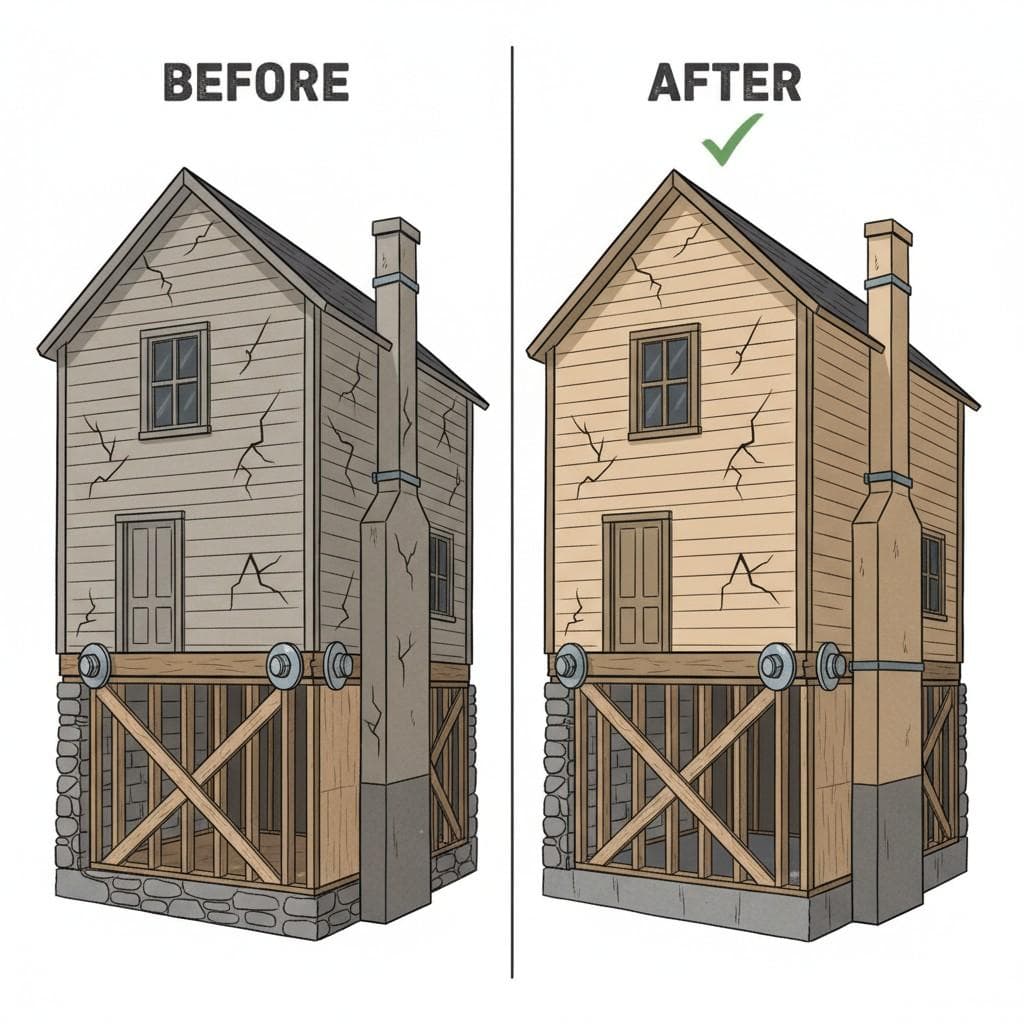
If you live anywhere near a fault line or in a city with past quake history, a seismic retrofit should move to the top of your to-do list. The benefits stretch far beyond safety compliance they’re about saving lives, saving money, and avoiding years of stress.
The number one risk in any big earthquake is building collapse. Studies from the U.S. Geological Survey (USGS) have shown that buildings with weak foundations or cripple walls can fail in seconds, even in earthquakes that aren't record-breakers. A retrofit dramatically reduces the risk that your home’s structure will fail and hurt anyone inside.
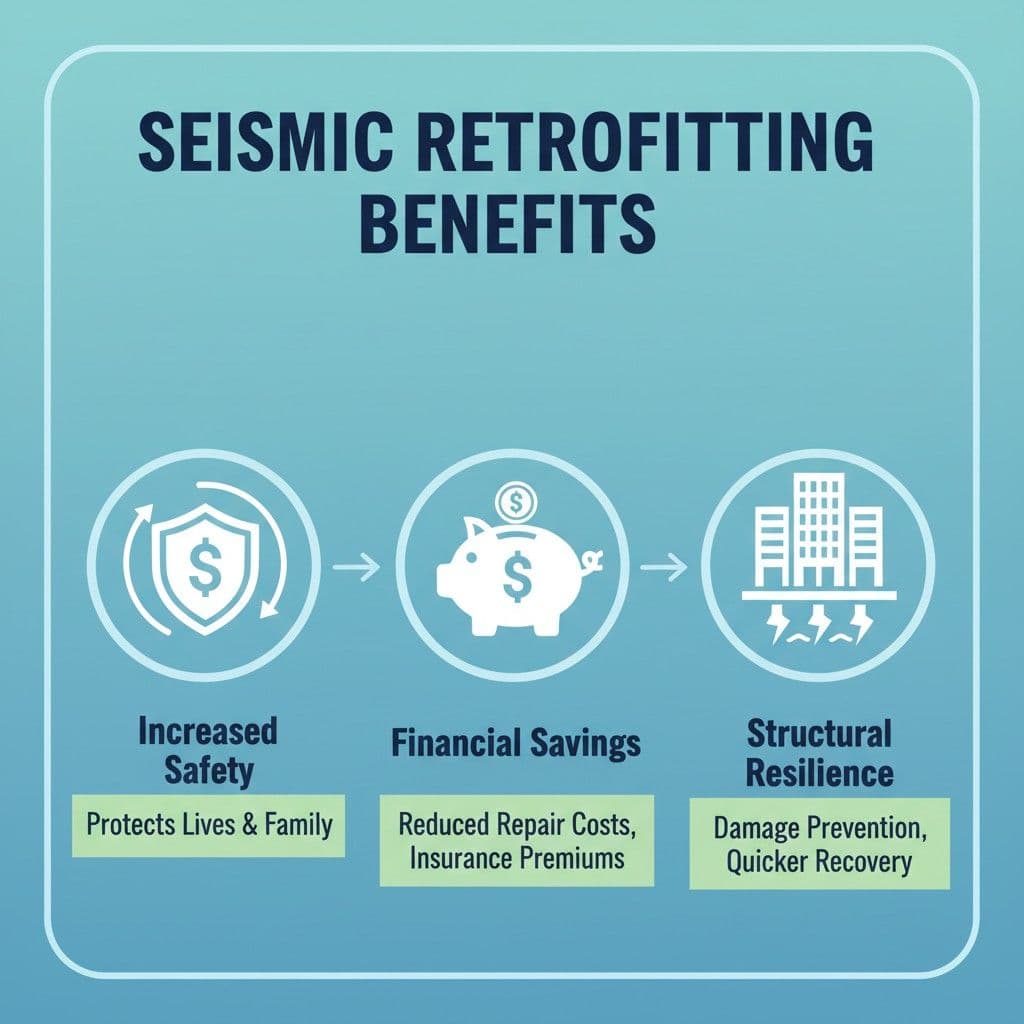
After a major quake, the cost of repairs or rebuilding can be ten times higher than simply retrofitting in advance. Insurance might not pay for damage if your home wasn’t properly reinforced. According to FEMA, every $1 spent on mitigation like seismic retrofitting can save $6 in future disaster costs. That’s a huge return!
Retrofitted homes help entire neighborhoods recover faster, because fewer people are displaced and local services aren’t overwhelmed with emergency repairs. In many cities, a documented seismic retrofit also boosts property values and makes homes more attractive to buyers.
You won’t just sleep better when it storms; you’ll rest easier knowing your house stands a much better chance during an earthquake and that you’ve done everything possible to protect your family.
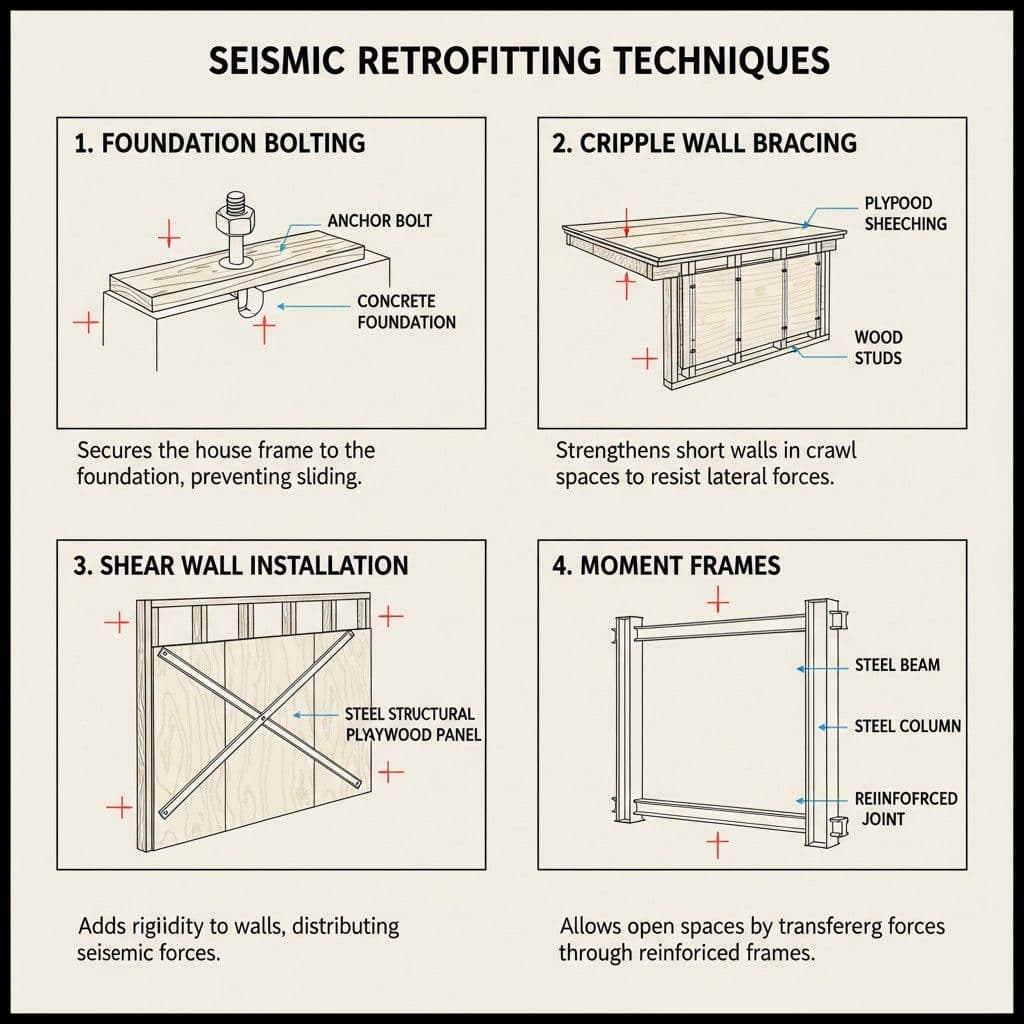
There isn’t a one-size-fits-all solution for seismic retrofitting. Different homes have unique vulnerabilities, and experts pick the best technique or mix of techniques for each one.
Technique | Description | Best For |
Foundation Bolting | Attaches the wooden base of your house to the concrete foundation using steel anchor bolts or foundation plates. | Older homes not already bolted down; major fixer-uppers. |
Cripple Wall Bracing | Adds sheets of plywood to short, weak walls (cripple walls) in the crawl space, stopping them from folding under side-to-side movement. | Houses built on raised foundations with a crawl space. |
Shear Walling | Strengthens long wall sections with structural panels or bracing to prevent buckling from lateral forces. | Homes with large open wall sections, like those with wide windows. |
Moment Frames | Steel frames added to big openings (like garage doors) prevent collapse by absorbing quake energy and pulling walls back. | Buildings with “soft stories” or large ground-level openings, like apartment buildings. |
To see which type your project needs, check out engineering examples at Engides – Structural Engineering Services.
Did you know? Modern retrofit techniques evolve as new seismic research is done. For instance, Rimkus Engineering emphasizes that foundation bolting and cripple wall bracing are especially effective for residential seismic retrofit. Check out more seismic retrofitting techniques at ScienceDirect for deeper reading.
Before starting your retrofit, it’s important to understand budgeting, local regulations, and how long the upgrade will interrupt your home life. Here’s what expert teams like Engides Engineering want you to consider:
Home Size (sq. ft) | Retrofit Type | Typical Range (USD) | Notes |
< 1,200 | Bolt & Brace Only | $3,000 - $7,000 | Small crawl space, simple foundation upgrades. |
1,200 – 2,000 | Bolt, Brace, Minor Shear | $5,000 - $12,000 | May include wall & chimney improvements. |
> 2,000 | Full Retrofit incl. Frames | $12,000 - $25,000+ | Often requires custom solutions for soft stories. |
Tip: Costs can vary by region, complexity, and contractor fees. Be sure to get at least three detailed quotes and make sure they include permit fees and engineering plans.
Most residential seismic retrofits take from a few days (simple bolt-and-brace jobs) up to several weeks (complex projects, large homes, or soft-story retrofits needing steel frames). Permitting may add extra days or weeks, so work with a contractor who knows your local codes Engides helps fast-track drawings for approvals.
If you live in California or other high-risk areas, check out incentives like the California Earthquake Authority’s Earthquake Brace + Bolt Program. Some cities also offer retrofit grants.
Expertise is EVERYTHING with seismic retrofitting. Bad installations can be worse than none at all. Here’s how to find and recognize a skilled, trustworthy team:
Look for specialist firms: Check for licensed general contractors who have experience with seismic retrofitting specifically, not just general construction. See Engides Engineering’s expertise or request a project review.
See their portfolio: Always ask for completed projects you can see, especially those that match your home’s age, size, and structure. Look up reviews, check references, and browse their website for real testimonials.
Check credentials: Ensure they're licensed, insured, and up-to-date with local building code requirements. The California Seismic Safety Commission offers resources to verify contractor records.
Demand detailed bids: Never accept vague cost estimates get a full breakdown of labor, materials, equipment, engineering services, and timelines.
Communication: The best companies patiently explain each step (foundation bolting, wall bracing, etc.), walk you through the permit process, and answer your questions. Good engineers listen, not just lecture.
Seismic retrofits don’t just work by magic. They are based on well-tested seismic engineering principles:
Transfer of Forces: A retrofit creates a continuous load path, transferring the strong side-to-side forces from the roof, down through the walls, and into the ground.
Shear Resistance: Bracing and shear panels resist horizontal motion to keep walls from snapping.
Energy Dissipation: Steel moment frames and reinforced connections dissipate seismic energy, decreasing the risk of structural collapse.
If you’re new to these terms, this FEMA seismic design guide is a great visual resource.
Further expert reading: The National Earthquake Hazards Reduction Program (NEHRP) provides up-to-date technical research on types of seismic retrofitting and case histories.
Residential homes and commercial buildings have unique retrofit needs. Most residential seismic retrofit projects focus on simple bolt, brace, and reinforce work, but commercial projects often require complex engineering, zoning analysis, and special permits.
Firms like Engides handle both, combining MEP and structural engineering. For commercial projects, Engides’s integrated framework ensures all building systems work together MEP, fire safety, HVAC, and more at every retrofit stage. For deeper dives into large-scale retrofits, see FEMA’s technical review.
There’s never a guarantee your home will leave an earthquake untouched. But you can do everything modern engineering knows to keep your family safe, your house standing, and your financial future secure. A professional seismic retrofit whether for a bungalow, a multi-story family home, or an apartment building makes a bigger difference than almost any other home investment. Ready to take your next step and want an expert review or engineered drawings for your retrofit? Book a project review with Engides Engineering for personalized, actionable guidance.
Seismic retrofit makes homes and buildings safer during earthquakes by addressing foundation, wall, and bracing vulnerabilities.
Common methods include foundation bolting, cripple wall bracing, shear wall addition, and moment frame installation.
Retrofitting saves lives, preserves your investment, and reduces repair bills after a disaster.
Choosing experienced, locally-knowledgeable retrofit contractors is vital.
Check local permits, available incentives, and always seek detailed, expert plans before starting.
For consulting, design, and permit-ready plans, consider Engides Engineering.
 Engides