Tl;Dr: This guide breaks down exactly what a drainage plan is and why every property needs one to prevent water damage. We explore specific solutions like flat roof drainage and the importance of drainage planes in your walls. By the end, you will understand how to secure custom roof drainage planning services to keep your home safe and dry.
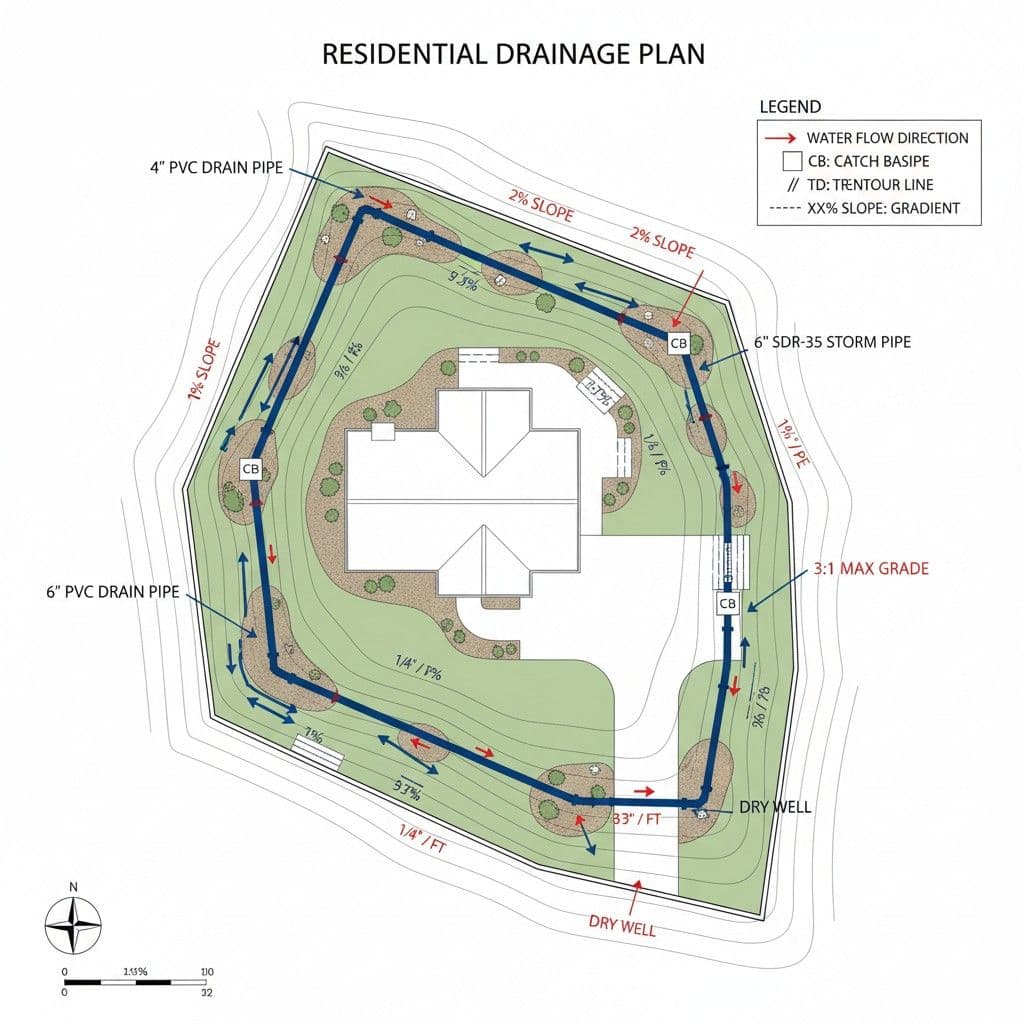
Water is one of nature's most powerful forces. While essential, uncontrolled water can undermine a building’s structural integrity, deteriorate its facade, and overwhelm even the most resilient roof assemblies. A robust drainage plan is the cornerstone of effective stormwater management. The purpose of this blog is to offer in-depth insight and advanced guidance for experienced property owners, architects, and civil engineers seeking to refine their approach.
Whether engaging in new construction or remediation of an existing structure, understanding site hydrology and building envelope design is crucial. This blog explores drainage modeling fundamentals and best practices, spanning from site grading to advanced flat roof drainage plan development and risk mitigation strategies.
A drainage plan is not merely a schematic; it is a detailed strategy that governs robust stormwater management. Prepared by civil or structural engineers, drainage plans provide graded surface contours, hydraulic calculations, and precise runoff pathways. They detail infrastructure slopes, pipes, and area drains with complete flow diagrams, ensuring water is safely diverted away from critical foundation elements and building systems.
Professionals recognize that neglected drainage planning can destroy engineering investments, leading to differential settlement or hydrostatic pressure failure. A comprehensive design incorporates best practices from agencies such as FEMA, underscores geotechnical survey requirements, and frequently demands integration with building information modeling (BIM).
A high-performing drainage plan accounts for peak rainfall events, climate change projections, and site permeability. For specifiers and advanced practitioners, resources like ASCE 24 provide invaluable benchmarks and methodologies.
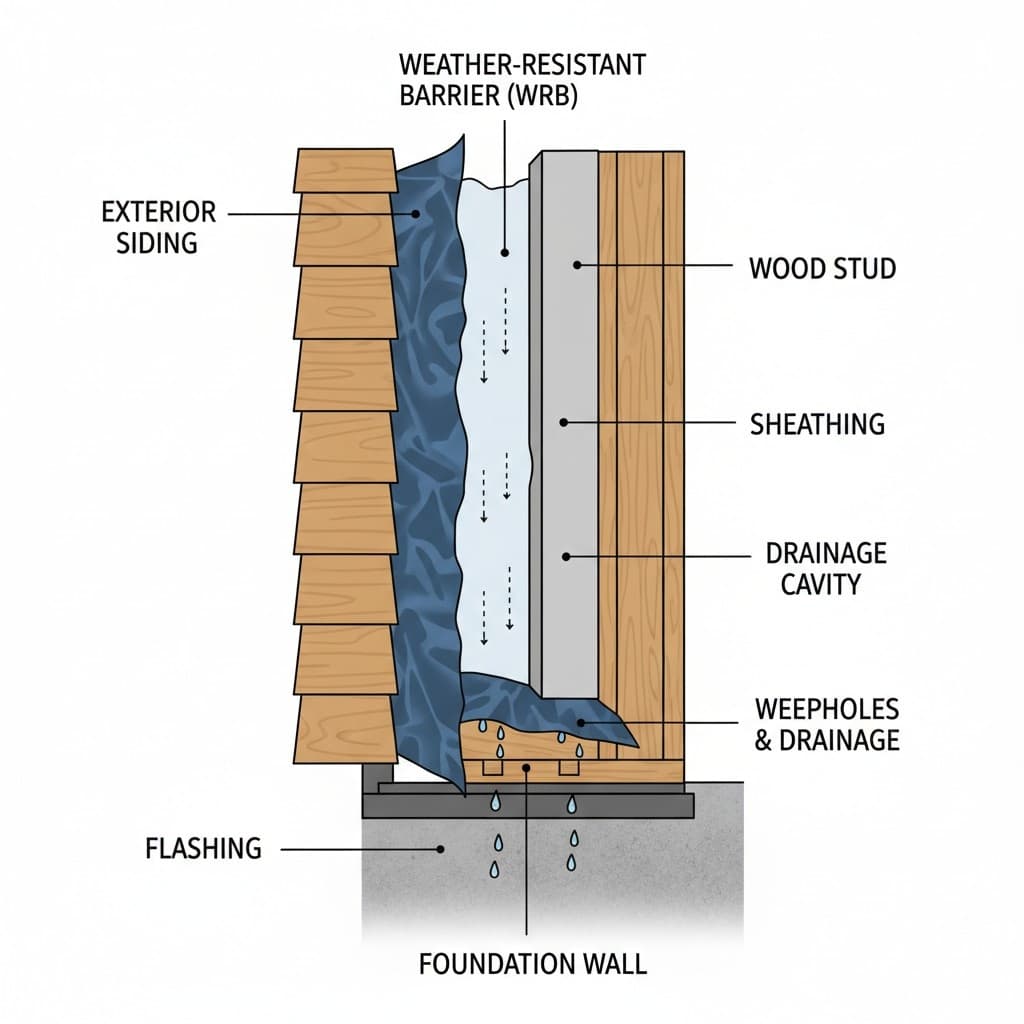
While site drainage plans address macroscopic water movement, the drainage plane within a wall assembly is essential for building envelope performance. This engineered void or channel enables incidental moisture, driven past cladding by wind or capillarity, to exit the structure via gravity.
A truly resilient envelope deploys weather-resistant barriers, capillary breaks, and vapor-open yet waterproof membranes. Practitioners should reference guidance from Building Science Corporation and The Whole Building Design Guide for optimal drainage plane construction. Installation errors improper flashing details, compressed air gaps are leading causes of premature wall failure, especially in high-exposure zones.
For a deep dive into drainage planes and advanced facade solutions, consult the Building Envelope Engineering service for technical resources and design support rooted in real engineering scenarios.
Flat roofs present unique technical challenges, requiring stringent hydraulic design and careful detailing. Inadequate flat roof drainage planning results in ponding, membrane blistering, and ultimately, costly structural remediation. Industry experts consistently cite ponding loads as a driver of roof deck deflection and accelerated waterproofing failure.
Ponding water, persisting beyond 48 hours after rain, can increase live loads, compromise insulation, and create conditions for biological growth. Remediation costs are significant and often avoidable with sound initial design.
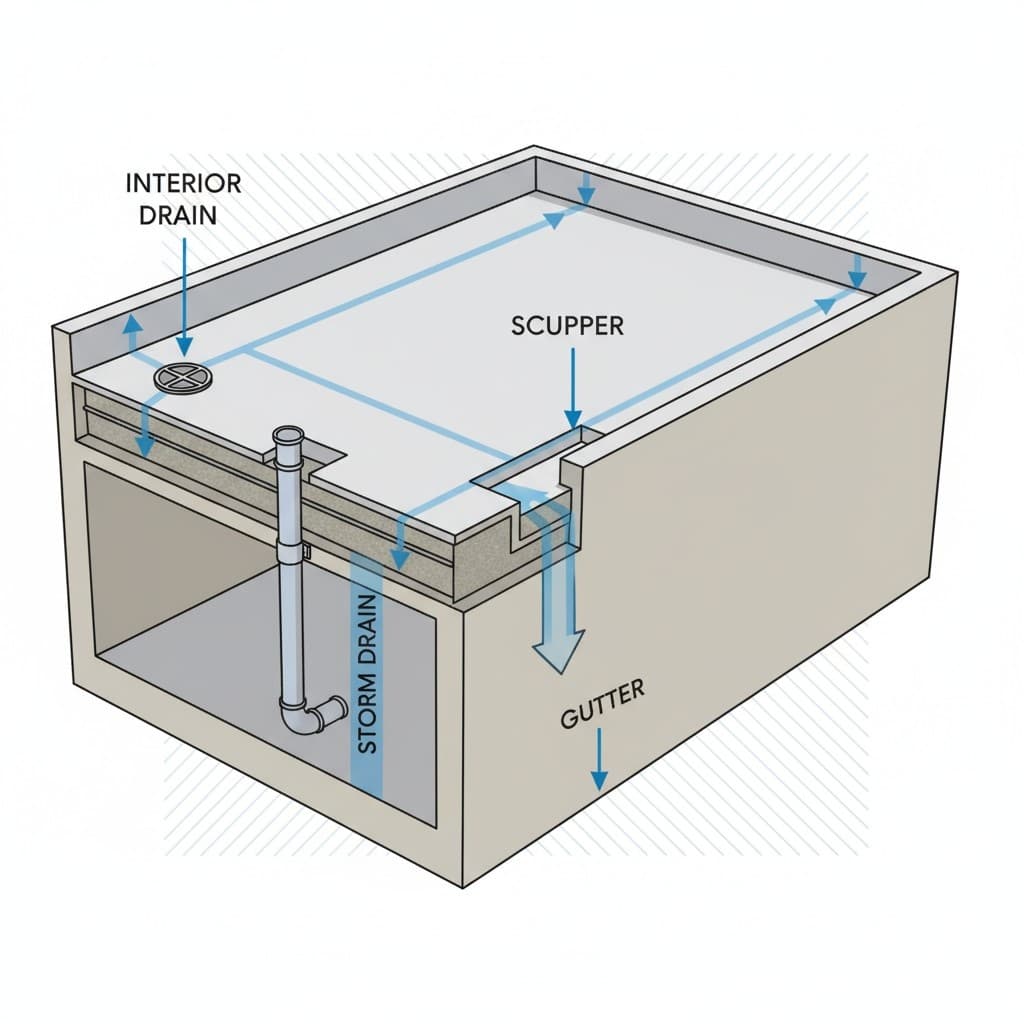
Engineered solutions for commercial and residential structures include:
Interior Drains: Located at low points, interior drains connect to stormwater systems below the roof line for optimal gravity flow and freeze protection.
Scuppers: Engineered as overflow provisions within parapet walls, scuppers safely discharge water during heavy events or primary drain blockage.
Gutters: Precision-sized gutters reduce backflow risk and enable controlled runoff to designated site drainage features.
Professionals often need to audit existing drainage plans or recreate as-built conditions when plans are absent. Start at your municipal building department for archived documents. Forensic water tracing during rain events, coupled with site survey data, illuminates problem areas.
Evaluate:
Downspout and drainage outlet placement relative to foundations
Surface grading and interaction with hardscaping
Condition and location of French drains, catch basins, and backflow preventers
Use high-accuracy laser levels for differential elevation checks. Field observation, supplemented by digital modeling, provides clarity.
Complex hydrological conditions, intricate roof geometries, and code compliance concerns warrant professional intervention. Experts equipped with hydrology simulation tools and local building code experience are instrumental for custom roof drainage planning services.
These specialists:
Analyze catchment area, rainfall intensity curves, and connection loads
Utilize CFD modeling for optimal overflow design
Deliver stamped and code-approved plans suitable for permit application
Reference organizations such as NRCA and International Code Council (ICC) for compliant methodologies. Expertise from EngiDes Engineering deliver tailored, effective strategies for complex projects.
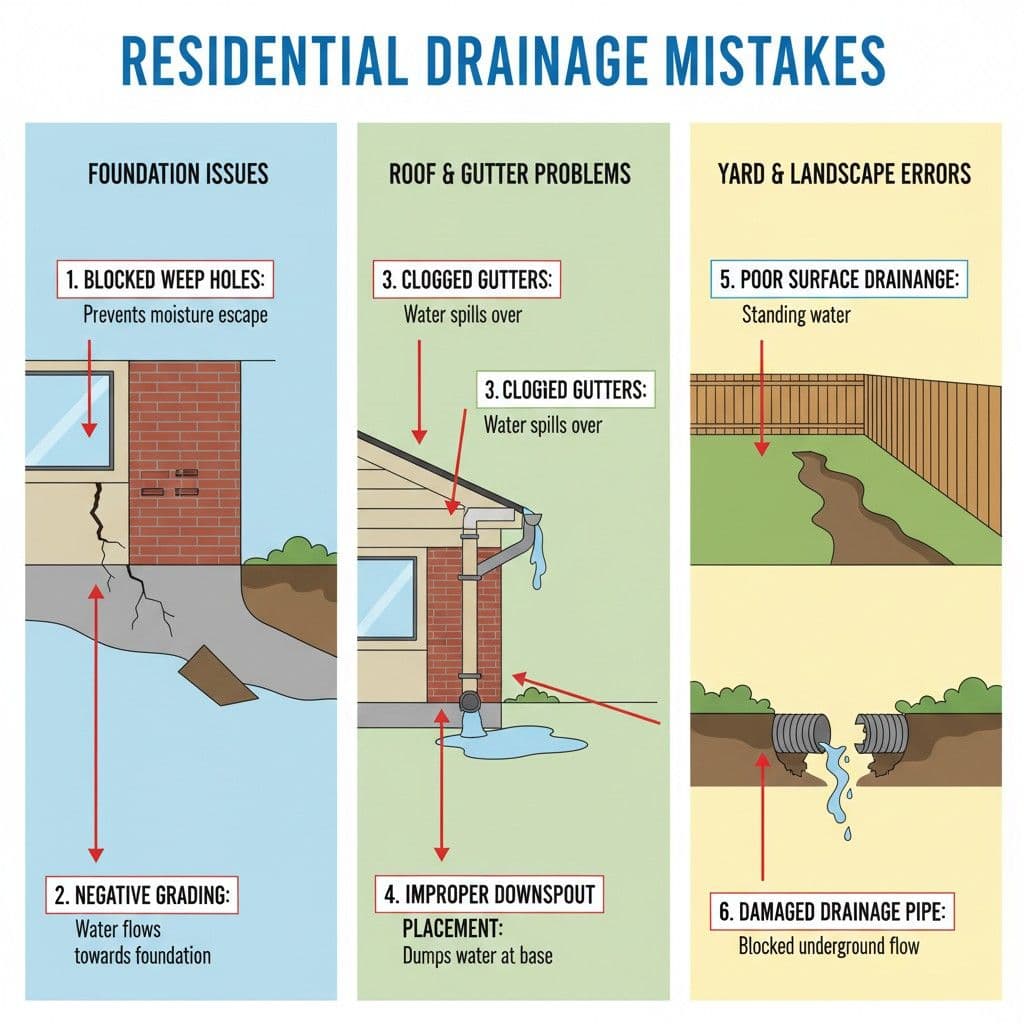
Even experienced clients encounter issues such as the following:
Mistake | Consequence | Solution |
Ignoring Downspouts | Foundation saturation, structural movement | Add extensions per hydrological recommendation |
Blocking Weep Holes | Mold, freeze-thaw cycling within facade cavities | Maintain clean, unobstructed weep details |
Mulching Too High | Insect infestation, capping of critical vent space | Minimum 6 inches below siding or veneer base |
Ignoring Slope | Infiltration at below-grade entries, negative grading effects | Correct grades; lift settled hardscape; regrade |
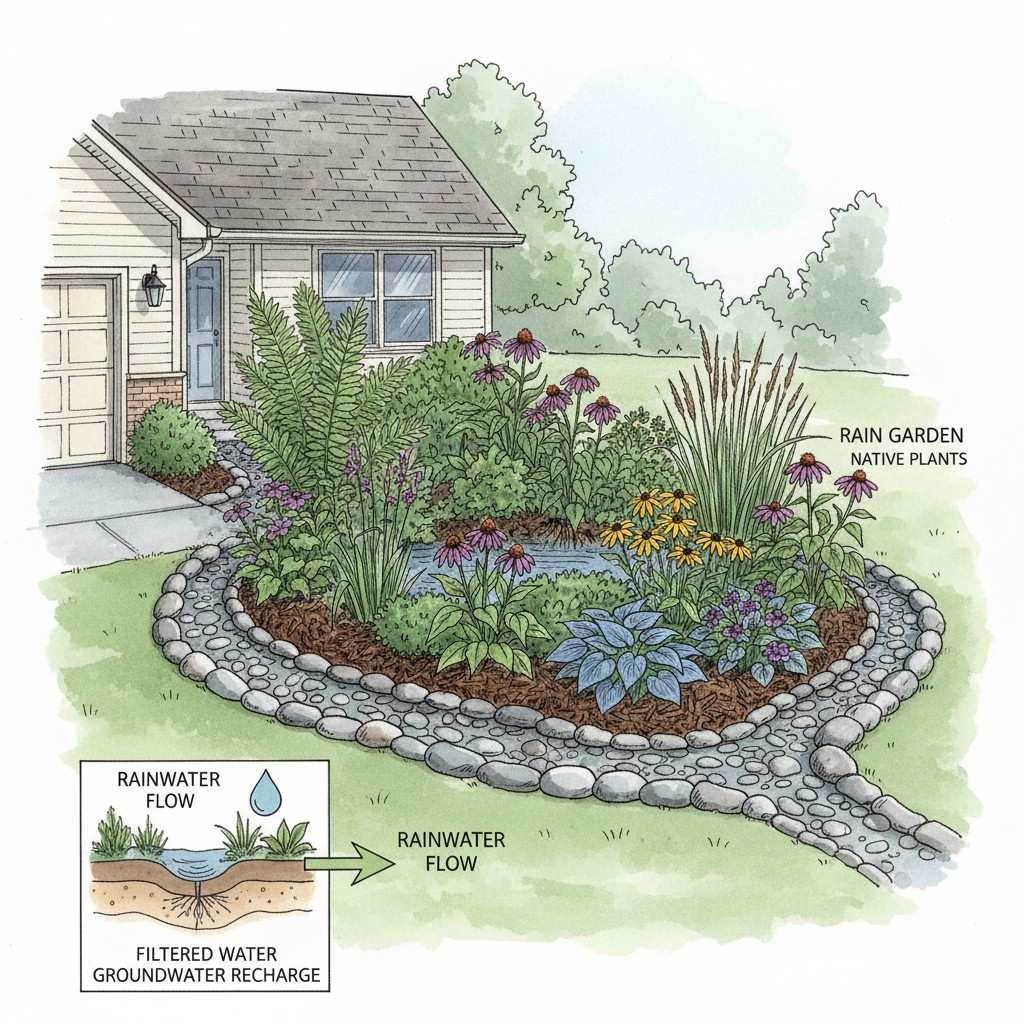
Strategically designed landscapes form an integral part of a holistic drainage plan. Rain gardens, bioswales, and permeable paving can increase site absorption and reduce runoff volume per EPA Green Infrastructure guidance.
Yet, landscape architects and engineers must collaborate to prevent root intrusion into subdrainage pipes and mitigate risks from aggressive plantings. Balance is key: effective site drainage achieves sustainability, regulatory compliance, and long-term durability with minimal ongoing maintenance.
Water intrusion is often called the "silent destroyer" of real estate investments. Comprehensive drainage plans carefully engineered for both ground and roof water afford robust protection and minimize risk. Prioritize detailed design and regular system audit. For expert investigative or remediation engineering, refer to EngiDes.com.
Whether you require a flat roof drainage plan or superior custom roof drainage planning services, a forward-thinking, code-compliant approach delivers lasting value.
From site grading to advanced roof detail, expert attention to every layer from the external landscape to the innermost drainage plane spells the difference between costly water remediation and long-term, watertight performance. Leaders in the field collaborate, innovate, and deploy robust solutions that confidently stand against the harshest elements.
Take the next step with expertise you can trust. Tap into the comprehensive capabilities and proven track record available through the advanced service pages at engides.com.
A drainage plan systematically manages water to protect structures from damage and assure regulatory compliance.
The drainage plane is a non-negotiable for wall system durability and moisture management.
Flat roof drainage plan design must be engineered for redundancy and local rainfall.
Site drainage plans benefit greatly from proper landscape integration and ongoing surveillance.
Partnering with custom roof drainage planning services providers ensures data-driven, compliant, and enduring solutions tailored to your unique needs.
 Engides