Tl;Dr: This guide provides seven essential tips for mastering electrical power and lighting design. We cover everything from understanding the fundamentals and prioritizing safety to leveraging modern software and considering sustainability. By following these expert strategies, you can create efficient, safe, and aesthetically pleasing electrical systems for any building project.
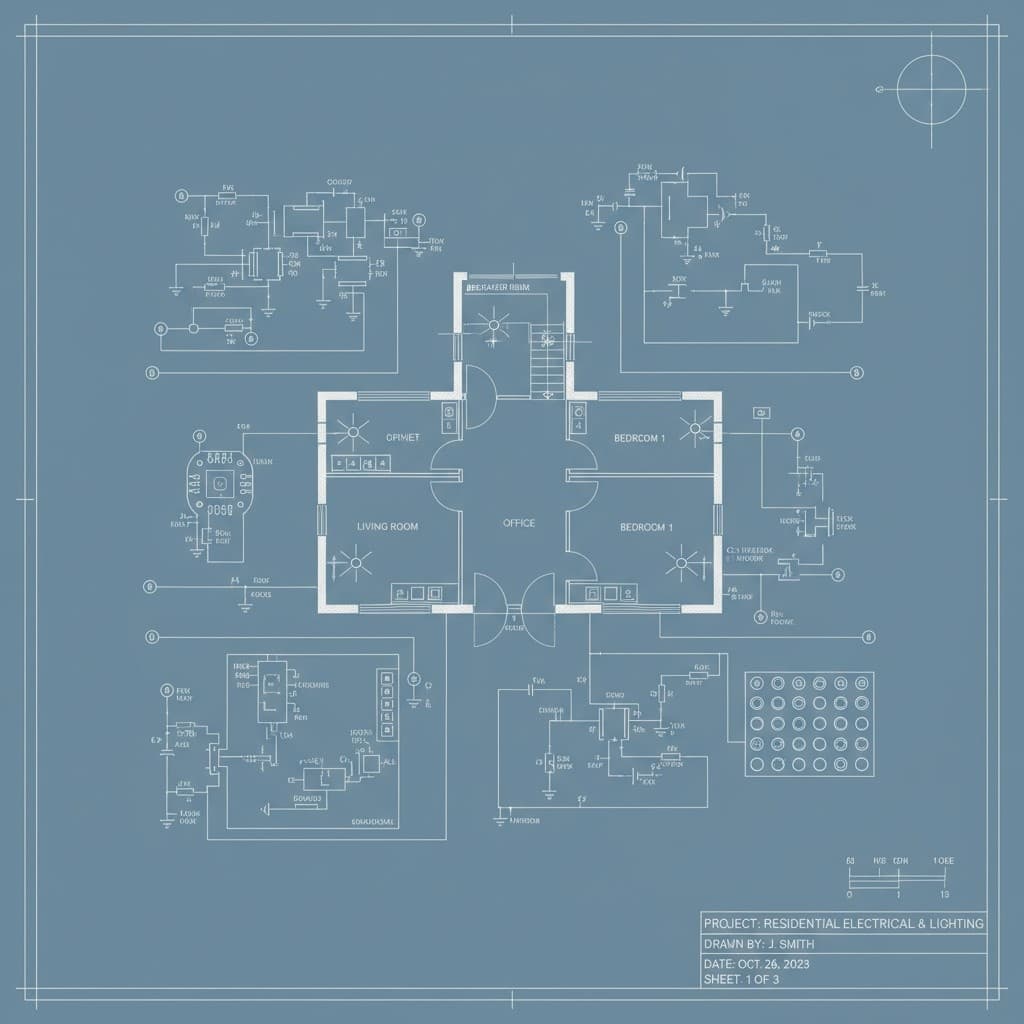
Welcome to your comprehensive guide on electrical power and lighting design. The goal of this post is to demystify the complex world of creating safe, efficient, and effective electrical systems. Whether you're a student, an aspiring engineer, or a professional looking to sharpen your skills, this article provides a clear roadmap. We will explore foundational principles, the critical role of safety, the latest software tools, and the importance of sustainable practices in modern electrical engineering and design. Think of this as your blueprint for turning theoretical knowledge into practical, real-world solutions. Our focus is on making the expert content of electrical power and lighting design accessible to everyone.
Before you can design complex systems, you must have a rock-solid understanding of the basics. This means going beyond just knowing Ohm's Law; it involves a deep comprehension of circuits, load calculations, voltage drop, and the National Electrical Code (NEC). These principles are the language of electrical engineering. Without fluency, your designs will lack a stable foundation.
Start by ensuring you can accurately calculate the total electrical load for a space. This involves adding up the power requirements of all lights, outlets, and equipment. Forgetting a major appliance or underestimating usage can lead to overloaded circuits and potential hazards. Likewise, understanding voltage drop is crucial for ensuring equipment operates correctly, especially over long distances. A solid grasp of these fundamentals is the first and most important step in any electrical design and engineering project.
In electrical design, safety is not just a feature; it's a non-negotiable requirement. A well-designed system is, first and foremost, a safe one. This means adhering strictly to building codes, standards, and regulations. The National Electrical Code (NEC) is the primary standard for safe electrical installation in the United States. Familiarizing yourself with its requirements for wiring, grounding, overcurrent protection, and clearances is essential.
Effective safety design also involves planning for the human element. This includes:
Proper Grounding: Protects against electrical shock and stabilizes voltage.
Circuit Breakers and Fuses: Prevents fires by interrupting the circuit during an overload or short circuit.
GFCI and AFCI Protection: Ground-Fault Circuit Interrupters (GFCIs) prevent shock in wet areas like kitchens and bathrooms, while Arc-Fault Circuit Interrupters (AFCIs) protect against fire-causing electrical arcs.
Clear Labeling: All panels and breakers should be clearly and accurately labeled so power can be shut off quickly in an emergency.
Compliance isn't about checking boxes; it's about protecting lives and property. A deep commitment to safety and regulatory standards distinguishes a professional from an amateur.
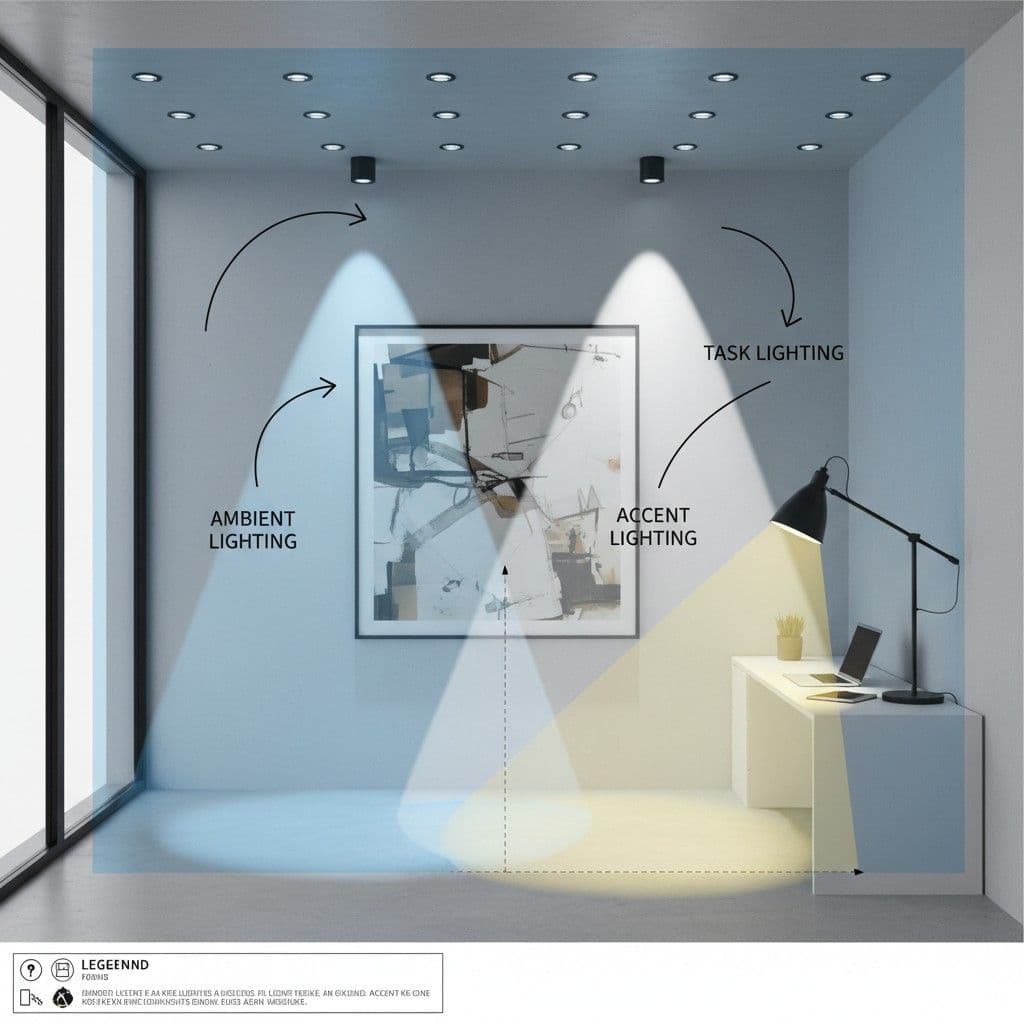
Effective lighting design is more than just making a room bright enough to see. It’s about creating a functional, comfortable, and visually appealing environment. The best way to achieve this is through a layered lighting approach, which combines three main types of lighting.
Lighting Layer | Purpose | Common Fixtures |
Ambient | Provides overall, general illumination for a space. It's the base layer of light. | Recessed cans, chandeliers, flush-mount fixtures. |
Task | Focused light for specific activities like reading, cooking, or working. | Under-cabinet lights, desk lamps, pendant lights over an island. |
Accent | Highlights architectural features, artwork, or decorative objects to create visual interest. | Track lighting, wall sconces, spotlights. |
By strategically combining these layers, you can create a space that is both practical and atmospheric. For example, a kitchen might use recessed cans for ambient light, under-cabinet strips for task lighting on the counters, and a pendant light over the island as an accent. This approach provides flexibility and control, allowing users to adjust the lighting to suit their needs and mood.
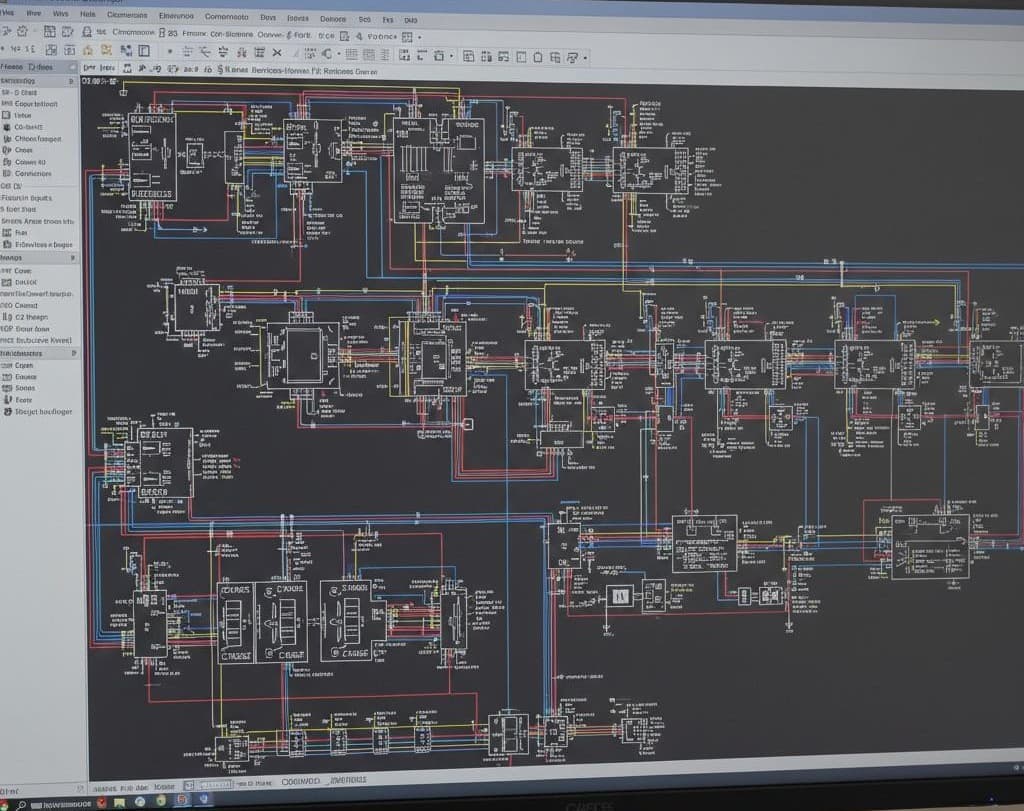
The days of drafting complex electrical plans by hand are largely behind us. Modern electrical engineering design and drawing rely heavily on sophisticated software that improves accuracy, efficiency, and collaboration. Tools like AutoCAD Electrical, Revit, and DIALux are indispensable for today's designers.
These programs help you:
Create Precise Schematics: Draft detailed and accurate 2D and 3D plans for power distribution and lighting layouts.
Automate Calculations: Instantly perform complex load calculations, voltage drop analysis, and panel scheduling, reducing the risk of human error.
Simulate Lighting: Visualize how a space will look with different fixtures and placements. You can analyze light levels (foot-candles or lux) to ensure they meet design requirements and energy codes.
Detect Clashes: In a 3D environment like Revit, you can identify potential conflicts where electrical conduits might clash with plumbing or structural elements before construction begins.
Learning to use this software effectively is a critical skill for any modern professional involved in electrical power and lighting design. It streamlines the entire process from concept to final documentation.
A great electrical design doesn't just meet today's needs; it anticipates tomorrow's. Technology evolves, and a building's use can change over time. A design that is difficult or expensive to upgrade is a failed design. Therefore, planning for scalability is a mark of expert-level thinking.
Consider these future-proofing strategies:
Install Larger Conduits: Running a larger conduit than immediately necessary makes it much easier to pull additional or higher-capacity wiring in the future.
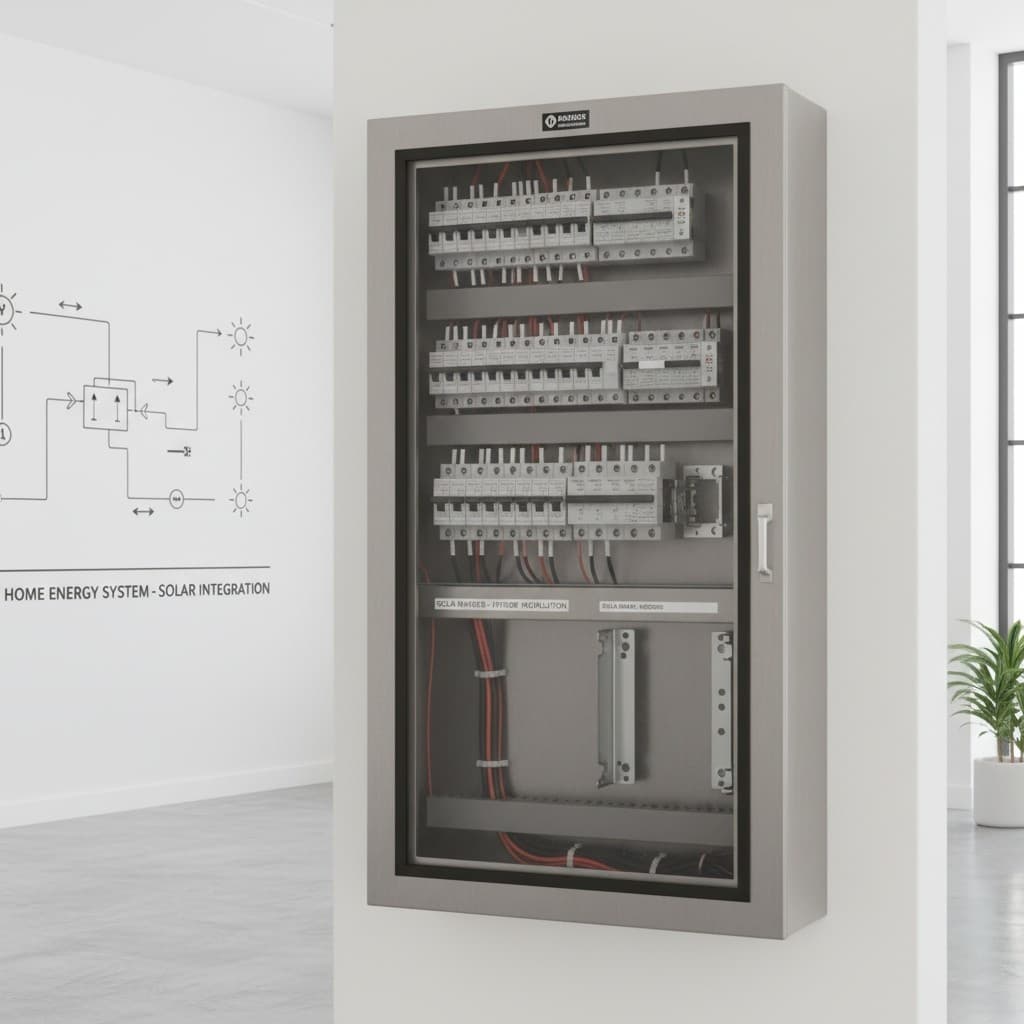
Oversize the Electrical Panel: Choose a panel with extra breaker slots. This allows for the simple addition of new circuits for a home addition, a new piece of industrial equipment, or an electric vehicle charger.
Centralized "Smart" Wiring: Run structured cabling (like Cat6) alongside electrical wiring to a central hub. This supports the easy integration of smart home technology, security systems, and advanced networking down the road.
Thinking ahead saves the client significant money and disruption later. It transforms a simple installation into a long-term investment.
Modern design and build electrical engineering is intrinsically linked with sustainability. Clients increasingly demand energy-efficient systems that reduce operational costs and minimize environmental impact. As a designer, you are in a prime position to deliver these benefits.
Key areas for promoting efficiency include:
LED Lighting: LEDs use up to 80% less energy than incandescent bulbs and last up to 25 times longer. Specifying LEDs is now standard practice for any new project.
Lighting Controls: Simple additions like dimmers, occupancy sensors (which turn lights off in empty rooms), and daylight sensors (which dim electric lights when natural light is available) can lead to substantial energy savings.
Energy-Efficient Transformers: Specify high-efficiency transformers to reduce power loss during voltage conversion.
Renewable Energy Integration: Design systems that are "solar-ready," making it easier for the property owner to add photovoltaic panels later.
An efficient design is a smart design. It provides long-term value for the client and demonstrates a commitment to responsible engineering practices.
Electrical design does not happen in a vacuum. It is a collaborative process that involves architects, mechanical engineers, interior designers, and the client. Clear and consistent communication is the glue that holds a project together.
You must be able to articulate your design choices and explain technical concepts in simple terms. Why did you choose a particular panel size? How will the layered lighting plan affect the feel of the room? Being able to answer these questions builds trust and ensures everyone is aligned.
Furthermore, collaboration helps prevent costly mistakes. By coordinating with the HVAC team, you can ensure your lighting fixtures don't interfere with air ducts. By working with the architect, you can integrate lighting seamlessly into the building's aesthetic. A successful project is often the result of a team that communicates well.
Mastering electrical power and lighting design is a journey of continuous learning. It's about combining a strong technical foundation with a creative approach to problem-solving. By focusing on safety, embracing new technologies, planning for the future, and communicating effectively, you can elevate your skills from proficient to exceptional. The principles we've discussed are not just rules to follow; they are tools to help you create systems that are safe, efficient, and perfectly suited to the people who will use them. A truly great design is one that functions so well, its complexities become invisible to the end user, leaving only a perfectly powered and beautifully lit space. This dedication to excellence is what defines a true expert in electrical power and lighting design.
For those eager to delve deeper into the world of engineering solutions and explore more expert insights, you can find a wealth of information at engides.com.
Master the Basics: A deep understanding of load calculations, circuits, and electrical codes is non-negotiable.
Safety First: Always prioritize safety by strictly adhering to codes like the NEC and implementing protective measures like GFCIs and proper grounding.
Use Layered Lighting: Combine ambient, task, and accent lighting to create spaces that are both functional and atmospheric.
Leverage Software: Use tools like AutoCAD Electrical and Revit to improve accuracy, automate calculations, and enhance collaboration.
Plan for the Future: Design scalable systems with oversized panels and conduits to accommodate future technological needs and expansions.
Focus on Efficiency: Champion sustainable design with LEDs, smart controls, and energy-efficient components to reduce costs and environmental impact.
Communicate Clearly: Effective collaboration with architects, clients, and other engineers is crucial for a successful project outcome.
 Engides