Designing a fire protection system is about more than just hanging sprinklers; it's a careful process of analyzing risks and choosing the right equipment. This guide breaks down the complex world of fire safety engineering into seven manageable steps, from initial risk assessment to final maintenance. We cover everything you need to know to ensure your fire protection system design is compliant, effective, and ready to save lives.
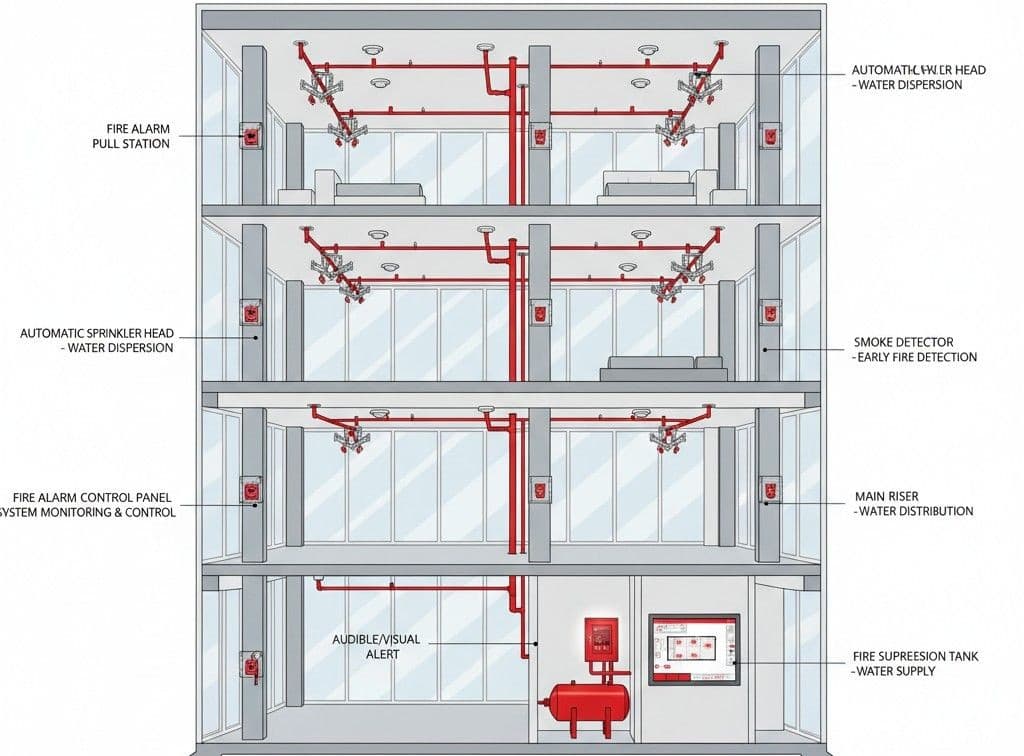
Imagine a building as a living, breathing thing. Just like a body needs an immune system to fight off sickness, a building needs a robust system to fight off fire. The purpose of this blog is to walk you through the journey of creating that immune system. We aren't just talking about putting red pipes on the ceiling. We are talking about a comprehensive strategy that detects danger, warns people, and suppresses flames before they destroy everything.
The scope of this guide covers the entire lifecycle of fire protection system design. Whether you are a building owner, a facility manager, or just someone curious about how these systems work, we will make sure you understand the basics without getting bogged down in confusing jargon. By the end, you will see why investing time and effort into a smart design isn't just a legal requirement—it is a moral obligation to keep people safe.
Before you draw a single line on a blueprint, you need to understand exactly what you are protecting. A library full of rare books requires a completely different approach than a factory that makes fireworks. This is where the foundation of your fire protection system design begins.
You must look at the "fire load," which is a fancy way of asking, "How much fuel is in this room?" If a room is full of cardboard boxes, the fire load is high. If it is an empty concrete hallway, the load is low.
Key factors to consider include:
Building Materials: Is the structure made of wood, steel, or concrete?
Occupancy: Who is inside? School children need different protection than trained industrial workers.
Contents: Are there flammable liquids, high-voltage electronics, or standard office furniture?
By identifying these risks early, you avoid costly mistakes later. For example, using water to put out an electrical fire is a recipe for disaster. Knowing your hazards helps you pick the right tool for the job.
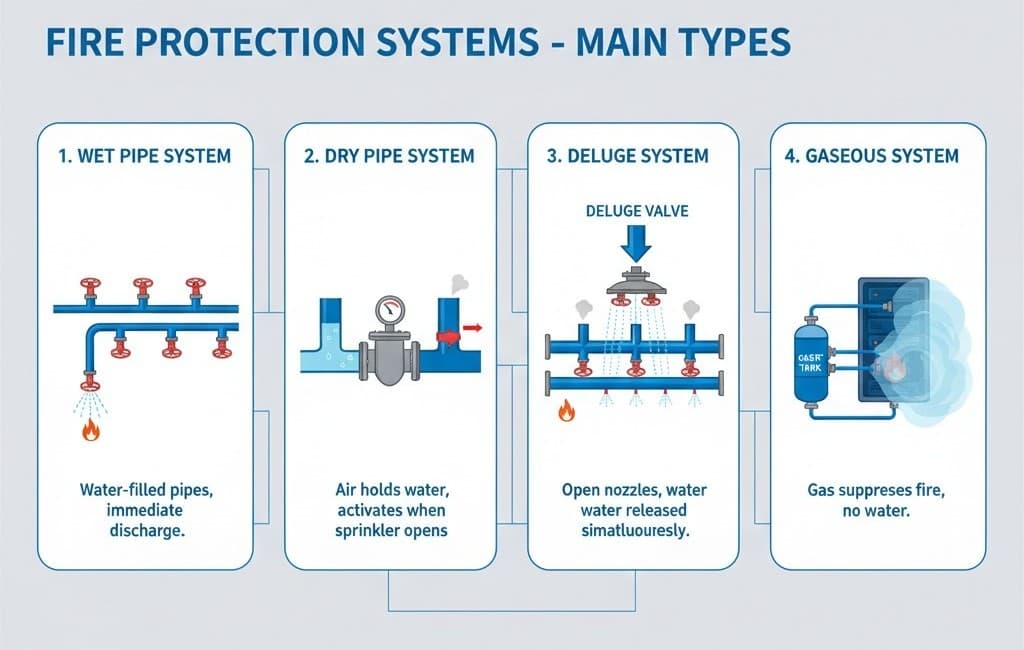
Once you know the risks, you have to pick your weapon. Not all fire systems use water. In fact, for some environments, water is the enemy.
Wet Pipe Sprinklers: These are the most common. The pipes are always full of water, ready to spray immediately when heat melts a trigger on the sprinkler head. They are great for offices and homes.
Dry Pipe Systems: In freezing climates, water sitting in pipes would turn to ice and burst the metal. Dry pipe systems hold pressurized air instead. When a fire starts, the air escapes, a valve opens, and water rushes in.
Deluge Systems: These are for high-danger areas. All sprinkler heads are open all the time. When a separate detector senses fire, a main valve opens, and water floods the entire area at once.
Gaseous or Chemical Systems: If you are protecting a server room, water will ruin the computers even if the fire doesn't. Clean agent systems use gas to suck the heat out of the fire or chemically disrupt it without damaging electronics.
Choosing correctly here is vital. A fire protection designer will weigh the pros and cons of each to find the perfect fit for your specific hazards.
You cannot design in a vacuum. You have to follow the rules. In the world of fire safety, the rulebook is usually written by the National Fire Protection Association (NFPA).
Their standards, like NFPA 13 for sprinkler installation or NFPA 72 for fire alarms, are the bibles of the industry. Local building codes also play a huge role. These rules tell you everything from how far apart sprinklers must be to how loud an alarm needs to sound.
Why compliance is non-negotiable:
Legal Safety: If a fire happens and your system isn't up to code, you could face massive lawsuits or jail time.
Insurance: Insurance companies often require specific standards. If you don't meet them, they might not pay out a claim.
Reliability: These codes exist because they work. Following them ensures your system will actually function when needed.
Navigating these codes can feel like reading a foreign language, which is why working with top fire protection and life-safety design consultants is often necessary. They translate complex regulations into a working plan.
A suppression system puts the fire out, but a detection system tells you it is happening. A truly great fire protection system design marries these two perfectly.
Think of detection as the system's eyes and ears. You have smoke detectors, heat detectors, and even flame detectors that "see" fire. Once they spot trouble, they need to communicate. This is where the alarm panel comes in. It is the brain of the operation.
When a detector trips, the panel does several things at once:
Alerts Occupants: Sirens wail and strobe lights flash to get people out.
Calls for Help: It automatically dials the fire department.
Activates Suppression: In some systems, the alarm panel tells the sprinklers or gas systems to release.
Shuts Down Equipment: It might stop elevators, close fire doors, or turn off ventilation fans to stop smoke from spreading.
Integration is key. If the smoke detector screams but the sprinkler stays silent, the fire wins. If the sprinkler activates but no alarm sounds, people might be trapped. They must work together seamlessly.
This step is where the math happens. You cannot just guess the size of the pipes. If the pipe is too small, not enough water will reach the fire. If it is too big, you waste money and lose pressure.
Engineers use hydraulic calculations to prove that the water supply matches the demand. They calculate how much pressure is lost as water travels through pipes, bends, and valves.
What goes into the calculation?
Water Supply Data: How much pressure is coming from the city water main?
Pipe Friction: Water rubbing against the inside of a pipe slows down.
Elevation: Pushing water up to the 10th floor is harder than pushing it to the ground floor.
This ensures that if a fire breaks out in the furthest, highest corner of the building, the sprinkler there will still spray with enough force to kill the flames. It is a precise science that underpins effective fire protection design.
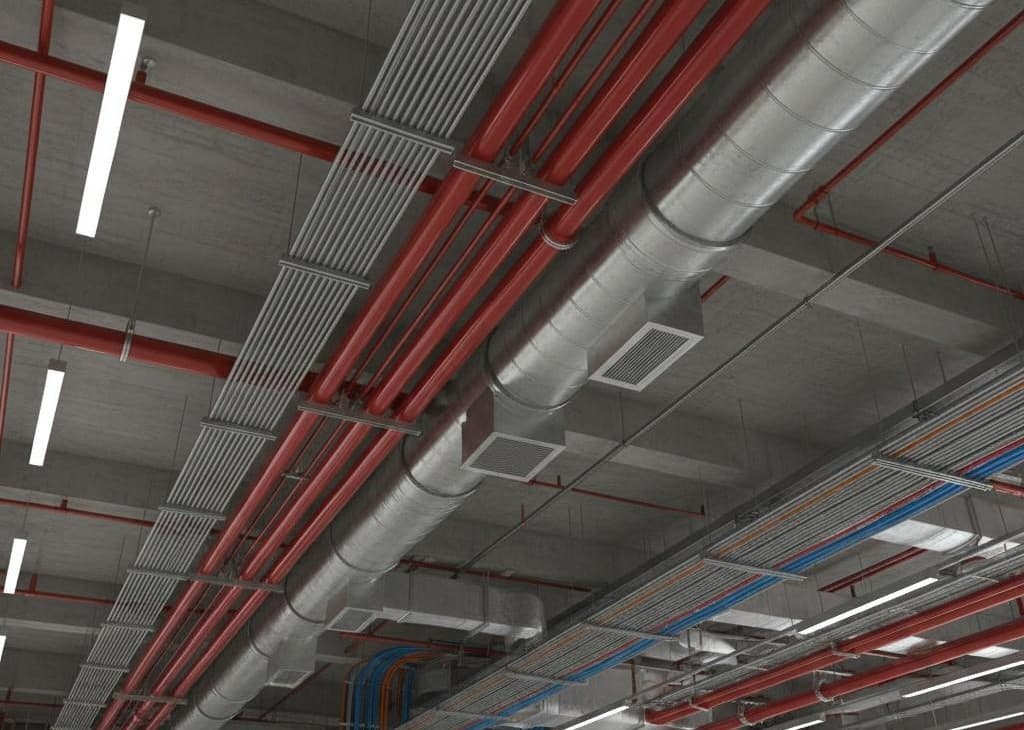
A building is crowded. Above the ceiling tiles, there is a war for space. You have air conditioning ducts, electrical conduits, plumbing pipes, and structural beams. Your fire pipes have to fit in there, too.
Coordination is critical to avoid "clashes." You don't want to get to the construction site and realize your main sprinkler pipe runs right through a giant air duct. Modern designers use 3D modeling tools (like BIM) to see these problems on a computer screen before anyone picks up a wrench.
Common coordination points:
Lighting: Sprinklers cannot block lights, and hot lights shouldn't be too close to sprinkler heads.
HVAC: Smoke detectors often need to be placed inside air ducts to stop smoke from circulating.
Structural: You generally cannot drill holes through major support beams to run pipes.
Good coordination saves time, money, and headaches during construction. It ensures that your fire protection system design exists in harmony with the rest of the building.
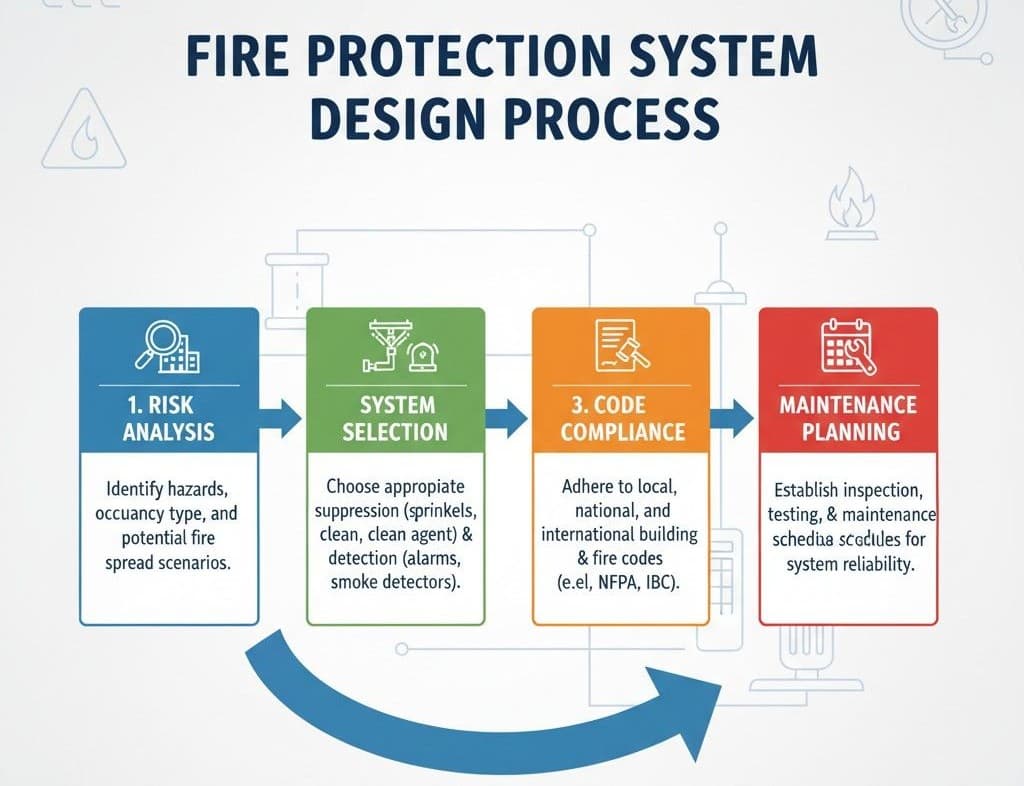
The design phase doesn't end when the building opens. A great design plans for the future. You must design the system so it can be easily tested and fixed.
This means putting valves in accessible places, not hidden behind permanent walls. It means labeling pipes clearly. It means providing a "test header" where firefighters can hook up hoses to test water pressure without flooding the building.
The "Set and Forget" Myth Many people think once a system is installed, they can ignore it. This is dangerous. Pumps seize up, pipes rust, and sensors get dusty. Your design should include a clear schedule for inspection, testing, and maintenance (ITM).
Weekly/Monthly: Check gauges and valves.
Quarterly: Test alarm switches.
Annually: Full system tests and professional inspections.
By designing for maintenance, you ensure the system remains reliable for decades, not just years.
We have traveled a long path from analyzing risks to planning for maintenance. Mastering fire protection system design is about precision, foresight, and a deep respect for safety standards. It is a blend of physics, engineering, and law, all wrapped up in the goal of preserving life.
As technology advances, these systems will get smarter. We are already seeing "smart" sprinklers that target fires more accurately and alarms that give voice instructions to fleeing occupants. But the core principles remain the same: Detect, Suppress, Survive. If you follow these seven steps, you aren't just building a system; you are building peace of mind.
For those looking to dive deeper or need professional help with their projects, exploring resources like engides.com is a great next step before we wrap up with our key takeaways.
Analyze First: Understand your building's specific risks and "fire load" before choosing equipment.
Select Wisely: Choose between wet, dry, deluge, or chemical systems based on the environment (e.g., freezing temperatures or sensitive electronics).
Follow the Rules: Adhering to NFPA standards and local codes is critical for safety and legality.
Connect the Dots: Ensure your detection (alarms) and suppression (sprinklers) systems communicate effectively.
Do the Math: Hydraulic calculations are essential to ensure water pressure is sufficient in every corner of the building.
Coordinate: Use 3D modeling to ensure fire pipes don't clash with lights, ducts, or beams.
Plan for the Future: Design the system so it is easy to inspect, test, and maintain over the long term.
 Engides